Why Choose Cork Rod Grips? They Outperform All Alternatives
You've probably handled dozens of rods without thinking about the grip. But spend a day fighting currents or casting into wind, and that grip matters. I've built rods for over ten years. I remember a client who insisted on swapping his factory EVA for cork. He worried cork rod grips would wear out fast. That was seven seasons ago. He still fishes that rod.
The truth is, fishing rod cork rings have a reputation that goes back decades. Anglers who grew up on old-school gear swear by them. Newer builders sometimes lean toward synthetics because they're cheaper. But once you actually fish a well-made cork handle, it's hard to go back. In this post, I'll walk you through why cork rod grips are still the smart choice, how to pick the right grade, and what to look for when sourcing components.
What Makes Cork Rod Grips Superior to EVA?
Check any fishing forum and you'll find cork versus EVA debates. Some guys love soft EVA. Others say cork gives better feedback and a secure wet grip. I fall into the second camp.
Natural Shock Absorption
Cork is a honeycomb of air-filled cells. That structure absorbs vibration without feeling dead. When a fish twitches your line, you feel that subtle tap through the blank and into the cork before you see the tip move. That same structure gives you a non-slip surface even with wet, slimy hands. Try that with smooth EVA after five minutes in a downpour.
Weight Advantage
A full set of Cork Rod Grips can weigh significantly less than EVA. For a surf rod or lightweight bass rod, saving ten or fifteen grams at the handle changes how the rod balances. Less weight in the rear means you fight the rod's fulcrum less all day.
Temperature Stability
Ever grabbed an EVA handle on a freezing morning? It feels like a rock. Cork stays closer to ambient temperature. It doesn't get brutally cold or scorching hot. That's a real quality-of-life upgrade when you fish early spring or late fall.
Fishing rod cork rings also breathe. Moisture doesn't get trapped against your hand. Water and sweat evaporate quickly, so your grip stays comfortable hour after hour.
How to Select the Right Grade of Cork Rod Handles?
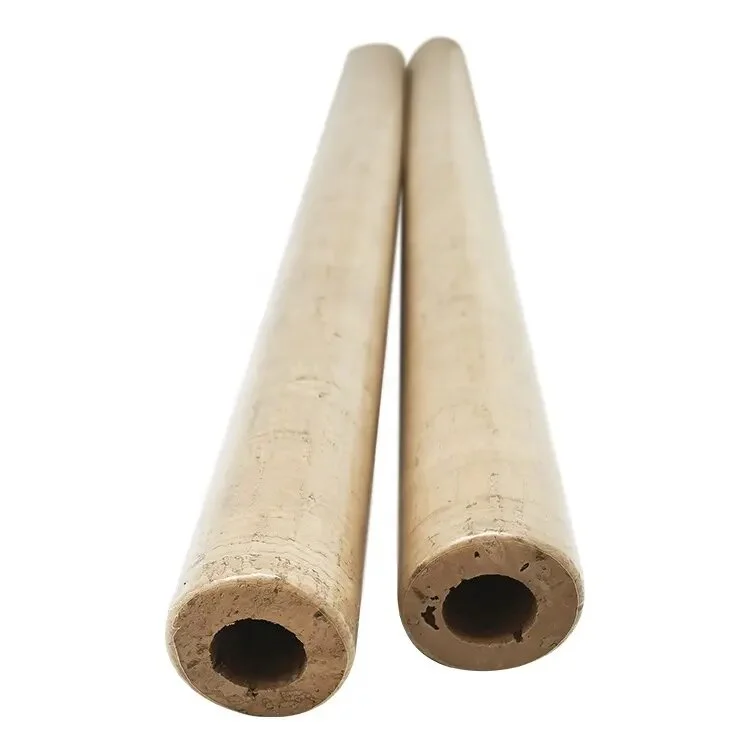
Not all cork is created equal. I’ve seen builders grab the cheapest pre-formed grip they can find, then wonder why it crumbles after one season. The difference comes down to three things: the raw material, the grade, and how the rings are assembled.
Here's what we stock and use in our shop.
Common stock sizes (all customizable):
Length 500mm OD 26mm, ID 10mm
Length 400mm OD 28mm, ID 14mm
Length 100mm OD 28.0mm, ID 14mm
We keep sufficient stock of all grades, from B up through 3A. Tolerances are small and stable. Need a non-standard length or ID? Just ask. We've done everything from ultralight trout handles to heavy tuna rail rods.
Grades B / A / 2A / 3A Explained
Cork grading isn't perfectly universal, but most suppliers follow a similar scale.
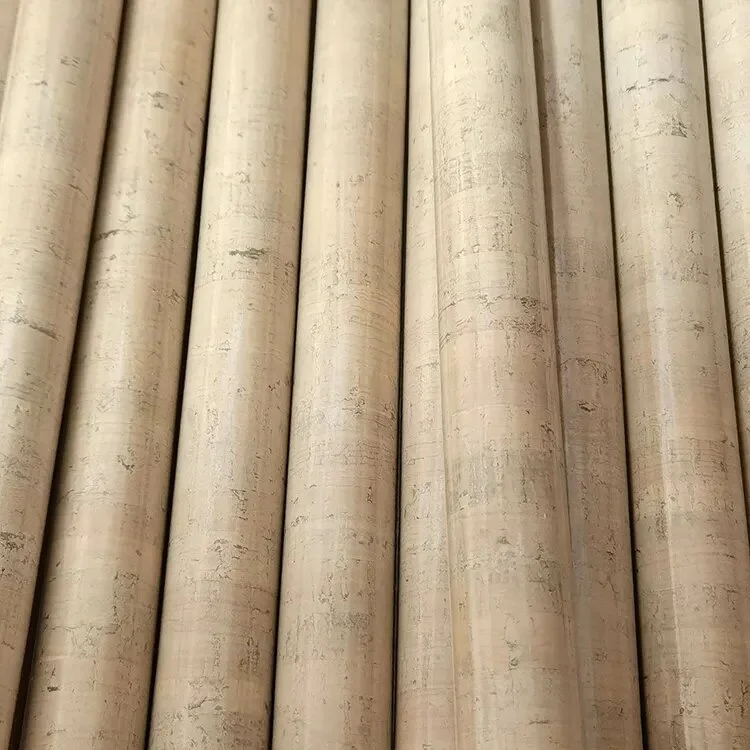
Grade 3A – Top-tier. Very few surface holes, bright yellow color, thick bark with tight grain. Ideal for showpiece rods or gifts.
Grade 2A – Slightly more filler needed, but still very clean. The sweet spot for most custom builders.
Grade A – Some visible pits and grain lines. Perfect for workhorse rods where function beats perfect looks.
Grade B – More holes and variations. Requires filling and sealing. Often used for budget rods or prototypes.
We stock cork rod grips in all these grades, so you can mix and match. For example, use 3A for the foregrip and B for the rear grip.
One more thing: thickness matters. Our cork comes from older trees with thicker bark, meaning fewer glued layers per ring. Thicker bark equals stronger rings.
Why Fishing Rod Cork Rings Still Dominate Custom Builds?
Walk into any rod-building gathering. Look at what experienced guys are turning on their lathes. You'll see fishing rod cork rings everywhere. Not because they're stuck in the past, but because cork works.
Fishing rod cork rings let you shape exactly what you want. Want an hourglass contour? No problem. Need a flared rear grip for a Spey cast? You can build that. Want a thin, straight grip for a finesse spinning rod? Sand it down until it feels right. EVA comes in pre-molded shapes or blocks that are harder to carve cleanly without a lathe. Cork rings stack, glue overnight, and shape beautifully with sandpaper.
I've built over two hundred rods using fishing rod cork rings. The ones that last come from consistent raw material. Our current stock avoids density variation because the Portuguese bark is uniform from batch to batch.
Fishing rod cork rings also accept finishes well. U-40 Cork Seal, thin epoxy, or even just paste wax – cork handles them all differently. Some builders leave grips raw so the cork naturally darkens with use. That patina is something synthetics can never replicate.
Durability and Maintenance
I hear the same worry: "Won't cork crumble after a few seasons?" No, not if you start with good material and take basic care.
Cheap cork crumbles because of low-density bark or excessive filler. Good cork compresses but doesn't break down. The natural waxes in Portuguese cork repel moisture and resist abrasion. I've pulled thirty-year-old rods out of garages with cork handles still perfectly fishable.
What actually damages cork:
Leaving a rod in a hot car for weeks (heat dries out natural oils)
Storing a rod wet inside a rod sock (mildew between rings)
Scrubbing with harsh brushes or solvents
Instead, clean with mild soap, warm water, and a soft rag. Air dry completely. Once a year, wipe with boiled linseed oil or a cork sealer. That's it.
If you get a chip or deep gouge, mix fine cork dust with wood glue, fill, sand smooth. You cannot do that with EVA.
Final Thoughts
Every builder has their preference. I've used synthetics on kayak rods where durability was the only goal. But for rods that bring me joy – the ones I grab first on a calm morning – I always come back to cork.
The combination of feel, weight, tradition, and customizability is hard to beat.
We keep Cork Rod Grips in stock at all grades and sizes. Don't see your exact dimensions? Send us a message. We cut custom IDs and lengths weekly. Tell us what you're building, and we'll help you pick the right grade.
Ready to upgrade your next rod build?
Shop our full collection of cork grips and rings, or contact us directly for bulk pricing on custom sizes.
References
Gudmundsson, A. (2018). Rod Building Guide. Nordic Angler Press.
Portuguese Cork Association. (2021). Cork Quality Grading Standards. APCOR.
Custom Rod Builders Guild. (2020). "Handle Materials Survey," The Rod Builder's Journal, 14(3), 22-29.
Author
Tracy sales Rep of Leecork
FAQ
Q: How long do cork rod grips typically last?
A: With decent care – cleaning after trips and avoiding extreme heat – a good cork grip can easily last ten to fifteen years.
Q: Can I use cork grips on a saltwater rod?
A: Absolutely. Cork is naturally resistant to salt. The bigger concern is rinsing the entire rod after salt use to remove salt crystals.
Q: Do you sell raw cork rings or only pre-formed grips?
A: Both. Our Natural cork handle (intermediate product) comes as assembled grip blanks in standard sizes, but we can also supply unglued rings. Just specify your needs when you order.
Q: How do I know which cork grade is right for my project?
A: For a show rod or gift, go 3A. For your personal everyday rod, 2A is the sweet spot. For a boat rod or loaner rod, A or even B grade with a good sealer works fine.

You May Like
0