
Cork Squat Wedge: This Tiny Cork Wedge Is Transforming Countless People's Squat Experience
If you're a regular at the gym or know anything about strength training, you've definitely heard the saying: "No squat, no workout." The squat is widely recognized as the "king of exercises"—it comprehensively stimulates the lower-body muscle groups, boosts core strength, and promotes overall muscle growth. But the reality is, many people experience knee pain, lower back discomfort, an inability to squat deep enough, or just never feel they're engaging the right muscles.
The problem often isn't "weak legs"—it's insufficient ankle mobility.
Enter a deceptively simple yet brilliantly designed little tool that's caught the attention of more and more trainees: the Cork Squat Wedge.
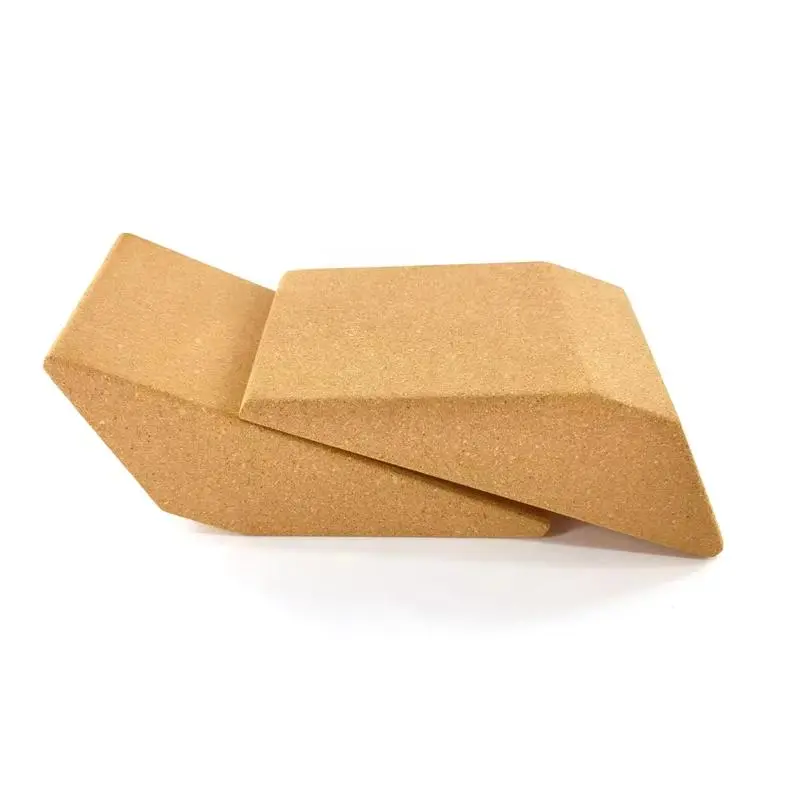
What Is a Cork Squat Wedge?
A Cork Squat Wedge is a wedge-shaped block made from high-density cork, specifically designed to elevate the heels during lower-body exercises like squats, lunges, and calf raises.
Its design logic is straightforward: when you place your heels on the sloped surface of the wedge, your ankles are passively placed in a plantarflexed position (toes pointing downward). This artificially compensates for a lack of ankle dorsiflexion range of motion. In simple terms, it helps you "pretend" your ankles are more flexible, allowing you to achieve a proper squat position—knees tracking past the toes, an upright torso, and full squat depth—even without perfect ankle mobility.
Why Use a Cork Squat Wedge?
1. Bypass ankle mobility limits and squat deeper
Insufficient ankle dorsiflexion is the primary reason many people can't squat deep enough. When your knees can't move forward adequately, your body instinctively leans excessively forward to maintain balance—resulting in a massive increase in lower-back strain while your glutes and quads fail to get effective stimulation.
By elevating the heels, the Cork Squat Wedge directly eliminates the dependence on ankle mobility. Your knees can move forward more naturally, your torso stays more upright, and squat depth increases dramatically. One user reported: "After using the wedge, my squat depth improved significantly, and my ankle flexibility got better too."
2. Precisely activate target muscles
With the heels elevated, the squat's biomechanics fundamentally shift—your center of gravity moves forward, and your knees travel further forward, which means quadriceps engagement increases notably. Meanwhile, because your torso stays more upright, your glutes are effectively stimulated through a greater range of motion.
3. Reduce stress on the lower back and knees
Excessive forward torso lean during squats is a major contributor to lower-back pain. The Cork Squat Wedge allows you to maintain depth while keeping your torso more upright, significantly reducing shear forces on the lumbar spine. At the same time, your knees move through a more optimal tracking pattern, effectively reducing abnormal patellofemoral joint stress.
This is precisely why many trainees with a history of knee or back pain can once again enjoy squatting after switching to a wedge.
4. Injury prevention
Beyond optimizing the squat itself, the Cork Squat Wedge also improves ankle stability and hip flexibility while enhancing knee joint stability, reducing the risk of lower-body training injuries at the source.
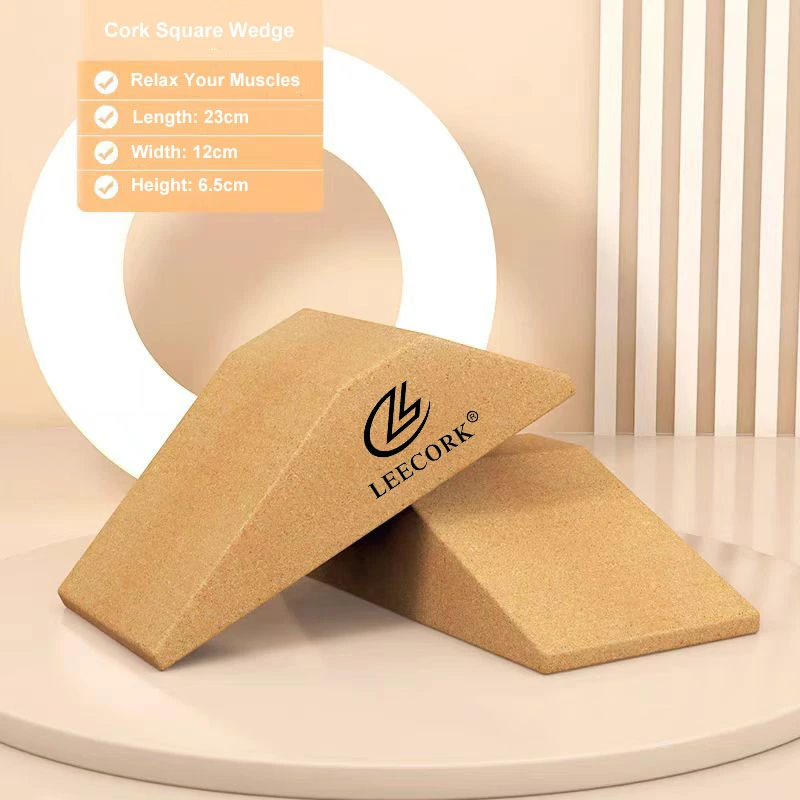
Why Cork?
Squat wedges on the market come in rubber, foam, plastic, and other materials—but cork is rapidly becoming the top choice for many. And for good reason:
Naturally non-slip: The coarse surface of high-density cork granules provides excellent traction, preventing slipping whether against your foot or the floor. One user noted that during barefoot training, "my feet didn't slip at all."
Eco-friendly and sustainable: Cork is harvested from the bark of the cork oak tree, which regenerates after harvesting, making it a renewable natural material.
Naturally antimicrobial and moisture-resistant: Cork has natural antibacterial properties that inhibit the growth of bacteria, mold, and odors. For high-sweat training scenarios, this is a huge plus.
Durable and sturdy: High-density cork offers sufficient firmness to support heavy loads while providing a degree of shock absorption, making it far more comfortable underfoot than hard plastic or metal.
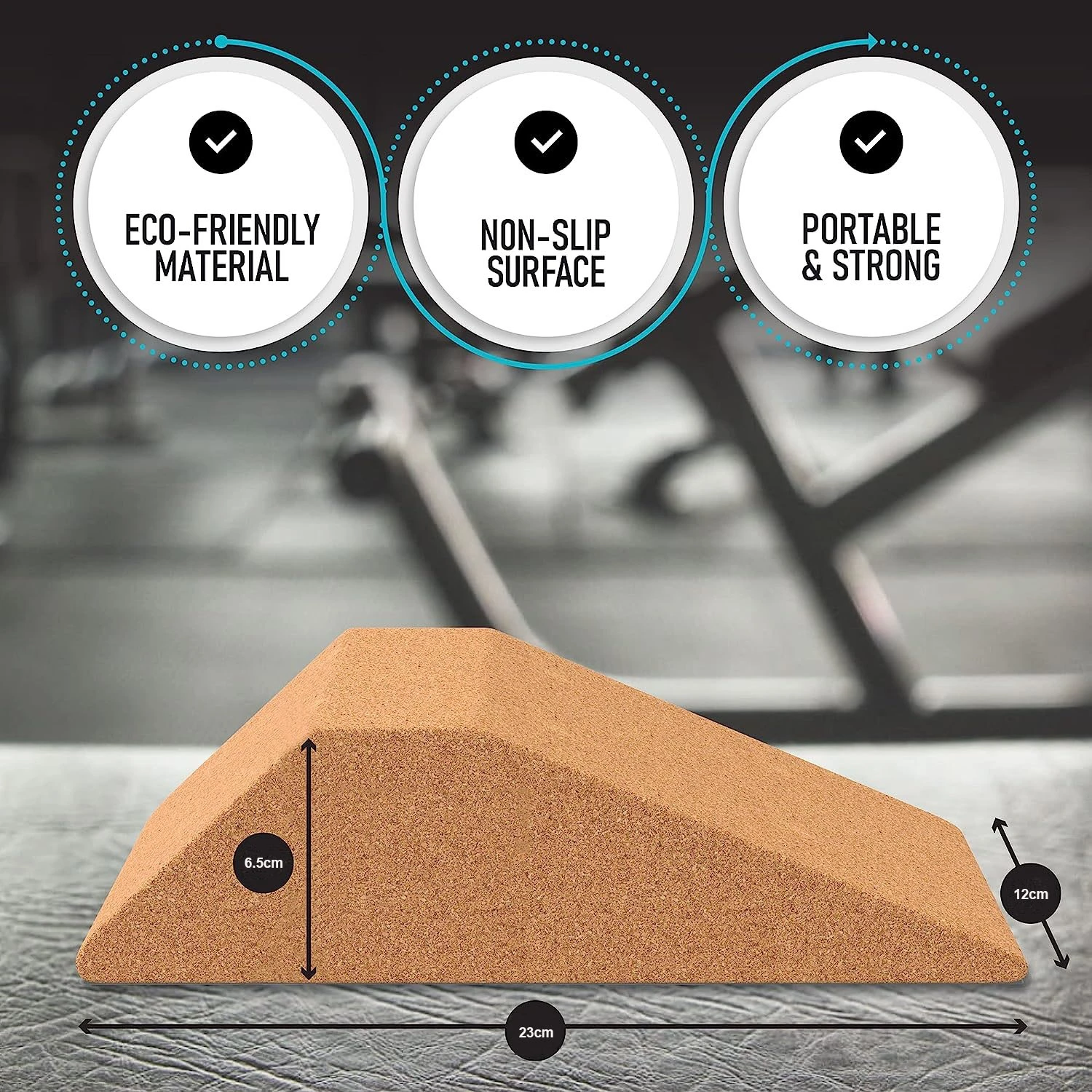
The Cork Squat Wedge Is Worth Far More Than Just Squats:
Calf stretching and raises: Use the wedge's slope for calf stretches to effectively improve ankle flexibility; conversely, stand on the lower end of the slope to perform calf raises with a greater range of motion for more thorough calf stimulation.
Lunges and Bulgarian split squats: Elevating either the back foot or the front foot changes the movement's loading pattern and emphasis.
Deadlifts and RDLs: Toe-elevated RDLs (Romanian deadlifts) allow for a deeper hamstring stretch.
Yoga and rehabilitation training: Cork wedges are also commonly used as supportive props in yoga postures, as well as in rehab protocols for conditions like plantar fasciitis and Achilles tendinitis.
How to Choose the Right Cork Squat Wedge for You?
1. Size: Make sure the wedge can fully support your entire foot—not just your heel with your forefoot hanging off. This is especially important for trainees with larger shoe sizes.
2. Choose the right angle: Common angle combinations are 20°/40° or 25°/45°. Beginners can start with a smaller angle and gradually progress.
3. Solid material: Opt for a high-density, one-piece molded cork product to avoid cracking or crumbling during use.
4. Non-slip design: Look for anti-slip textures or a non-slip top layer; the naturally rough surface of the cork bottom also provides sufficient friction.
Final Thoughts
Cork Squat Wedge is not a "shortcut"—it's a tool for scientific training. It doesn't help you "cheat"; it helps you work around your body's current limitations, allowing you to generate force in the correct movement pattern.
It's small, lightweight, and looks unassuming. But the squat experience it delivers—deeper range of motion, more precise muscle engagement, and less pain—will absolutely amaze you: So this is what a comfortable squat feels like.
Author
FAQ
Q1: What is the main problem it solves?
A: It addresses limited ankle dorsiflexion that prevents you from squatting deep, causes knee valgus (knee collapse), or forces your lower back to round forward as compensation. By elevating the heels, your knees can move further forward naturally, your torso stays more upright, and your squat depth improves instantly.
Q2: Who needs it the most?
A: People with a history of ankle sprains, naturally poor ankle mobility, or shortened Achilles tendons from prolonged sitting—as well as trainees who experience knee pain, lower back discomfort, or can't reach parallel during squats.
Q3: Besides squats, what other exercises can it be used for?
A: Lunges, Bulgarian split squats, calf raises, calf stretches, deadlifts (toe-elevated version), hack squats, and even yoga and foot rehabilitation drills. It has a very wide range of applications.
Q4: What are the advantages of cork material over rubber or plastic?
A: Natural non-slip properties (stays grippy even barefoot), eco-friendly and renewable, antibacterial and odor-resistant, offers some shock absorption, yet is firm enough to support heavy loads. It is also lighter than plastic and more durable than rubber.
Q5: How do you clean and maintain it?
A: Cork should not be soaked. Wipe the surface with a damp cloth and let it air-dry naturally, avoiding direct sunlight. Regularly check the bottom for wear to ensure its anti-slip performance remains effective.

You May Like
0Related Industry Knowledge