
Why Your Cat Ignores Everything but the Sofa: How the Right Large Cat Scratching Post Can Save Your Home (and Sanity)
If you’ve ever walked into your living room to find your brand-new sofa transformed into a shredded modern art installation, you already know the struggle. You bought a cat scratching post. Maybe even two. And yet, your feline overlord looks you dead in the eye, reaches out a single claw, and drags it slowly down the armchair—just to make a point.
Here’s the hard truth: most scratching posts are designed for humans to buy, not for cats to use. They’re flimsy. They’re too short. They’re made of materials that feel wrong under your cat’s paws. And that’s exactly why your furniture keeps paying the price. To stop this cycle, you need to understand one thing—cats don’t scratch to annoy you. They scratch because they have to. It’s how they mark territory, stretch their muscles, shed old claw sheaths, and relieve stress.
When you provide the right large cat scratching post, you’re not just giving them a toy—you’re offering an outlet for a biological need. And when it’s tall enough, sturdy enough, and textured like the bark they crave, something magical happens: they finally leave the couch alone. Let me show you what that actually looks like.
Why Size and Stability Matter More Than You Think
Most scratching posts are laughably undersized
Walk into any pet store, and you’ll see a sea of cat scratching posts that look like they were designed for hamsters. They’re short, they wobble, and they collapse the moment a cat puts any real weight into a good stretch. If you have a larger cat—or even just an enthusiastic one—those puny posts are useless.
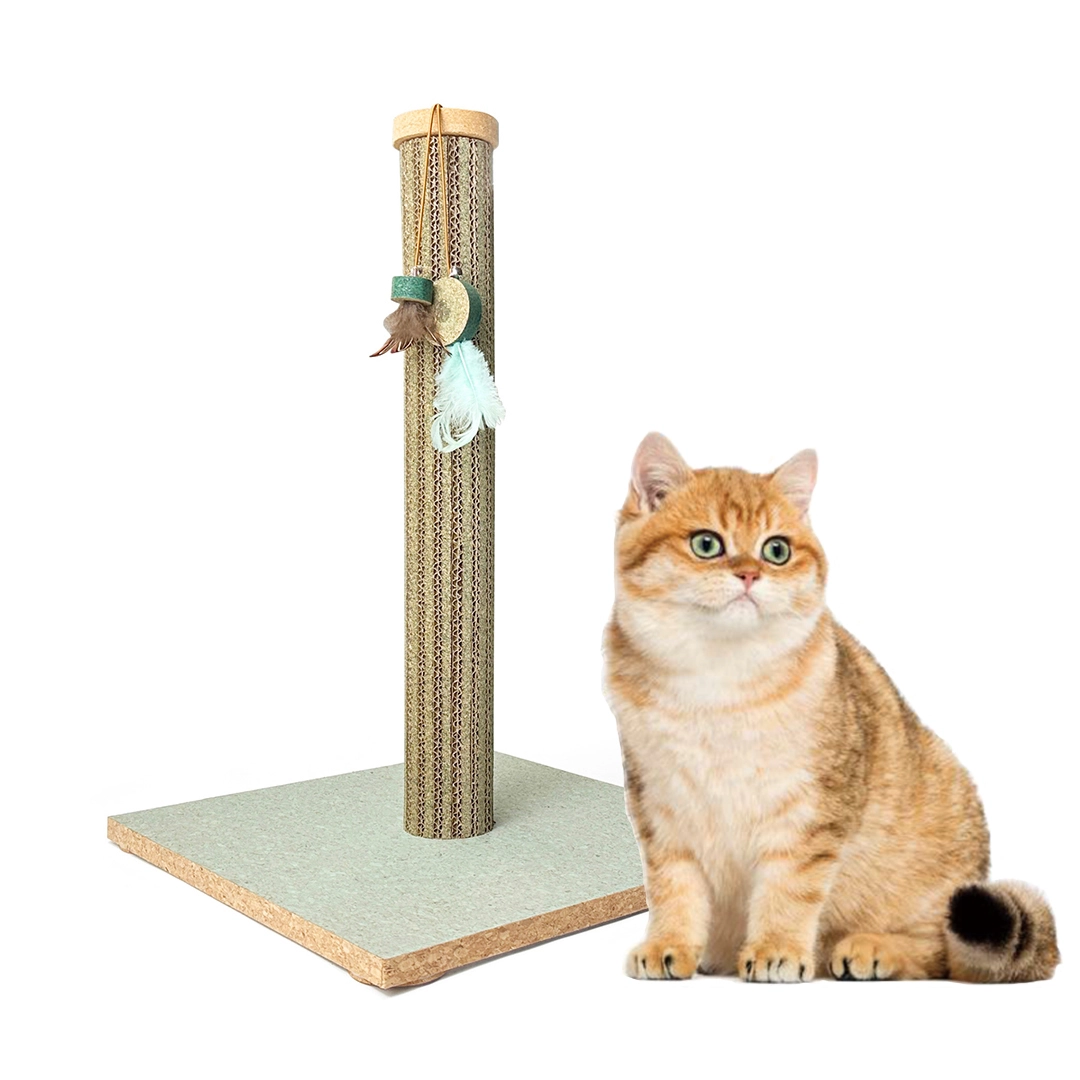
A proper large cat scratching post needs to be tall enough for your cat to stretch out fully. Adult cats need to extend their spines completely when they scratch, working out shoulder and back muscles they use for climbing and hunting. A 540mm height—like what you get with the Cork Cat Scratching Post Large—gives them room to do exactly that without feeling cramped. That’s the difference between a post they actually use and one they walk right past.
Stability is non-negotiable
If your cat jumps on a scratching post and it tips over or wobbles, they won’t trust it. Period. Cats want stability. They want to dig their claws into something solid that doesn’t move underneath them. A wide, sturdy base (like the 360*360mm base on the cork post) ensures they can really lean into their scratch without second-guessing whether the whole thing is about to topple over.
This is why so many cats choose heavy furniture instead of their scratching post. Your sofa doesn’t move when they claw it. If your post doesn’t offer the same confidence, they’ll always pick the couch. A large cat scratching post that’s built solidly solves that problem before it even starts.
The Natural Surface Connection: Why “Tree Bark” Feeling Wins Every Time
Understanding why cats are drawn to certain textures
Cats aren’t being picky for no reason. Their scratching preferences are deeply wired into their instincts, and those instincts are closely tied to survival in the wild. In nature, cats scratch trees to leave visual and scent marks, stretching their claws along the rough bark. That texture is key—it’s rough enough to grip, firm enough to resist, and satisfying to tear into.
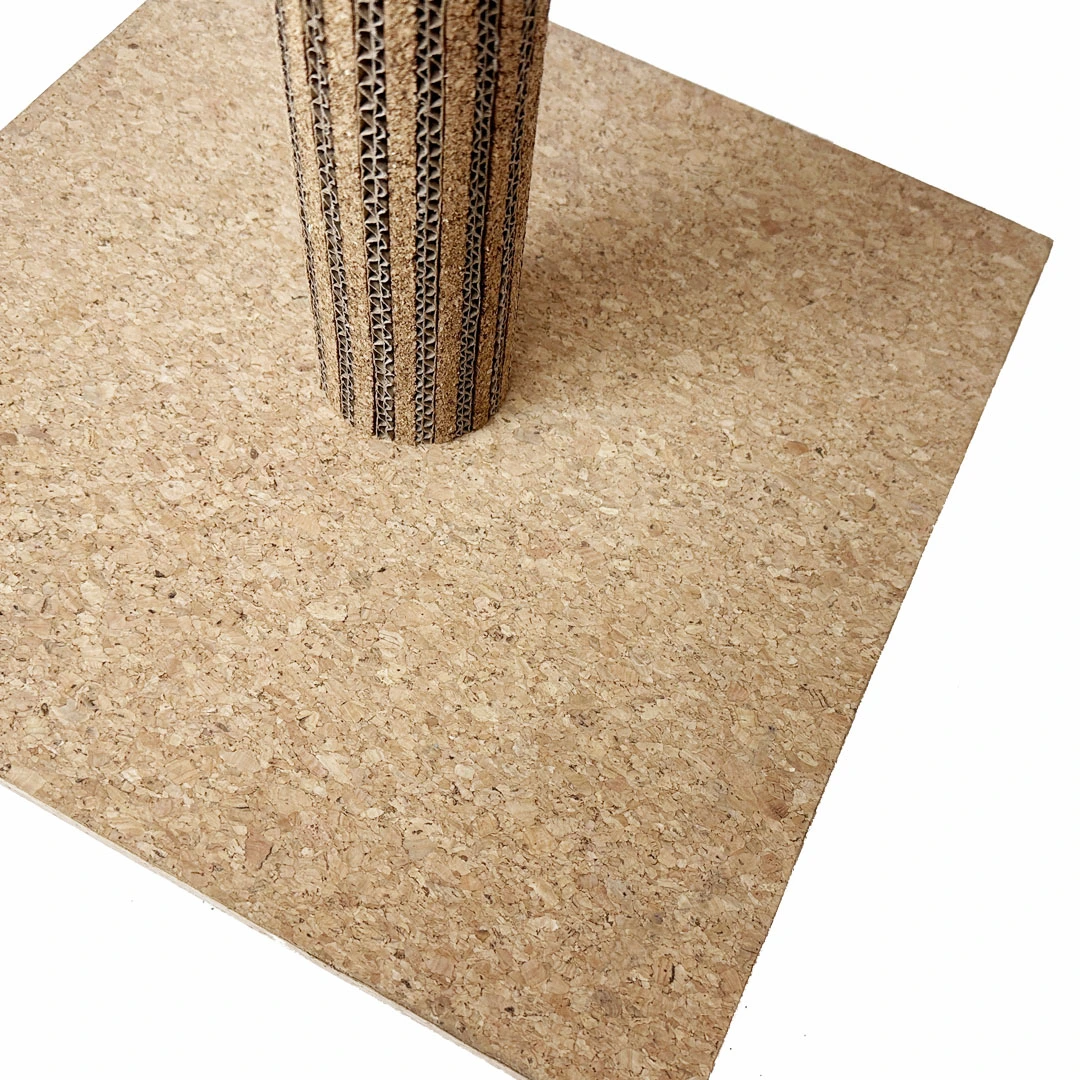
The surface of a scratching post should mimic that “bark” feel. That’s where cork stands out. It’s not perfectly smooth. It’s not soft like carpet or synthetic fabric. It’s textured and organic, similar to the sensation of dragging claws across a real tree trunk. For cats, this isn’t just nice—it’s stimulating. It tells their brain “yes, this is right”.
Cork as a tactile win
Most people think about cardboard or sisal when they picture cat scratching surfaces, and those are fine options. But cork offers something unique—it’s moderately resistant without being punishing. It’s firm enough to wear down claws but not so abrasive that it feels uncomfortable. And unlike carpet, which can snag and trap claws uncomfortably, cork allows for a smooth, natural scratching motion. For a large cat scratching post, having a surface that actually feels like nature makes all the difference in whether your cat gets hooked or ignores it completely.
How Catnip Transforms a Basic Cat Scratching Board into a Magnet
Here’s a secret that will save you a lot of headaches: even the best scratching post can be ignored if your cat doesn’t see it as interesting. That’s where catnip comes in.
Sprinkling catnip on a scratching surface isn’t just a gimmick—it works. It makes the post smell exciting and familiar, drawing your cat in to investigate. Once they’re there, they naturally start pawing at it, and before long, they’re scratching. It’s like a preview that turns into a habit.
Does catnip work on every cat? Not all of them. Research on kittens shows that catnip doesn’t always change their scratching behavior—they may prefer an S-shaped cardboard scratcher regardless. But for many adult cats, catnip is a powerful attractant. It’s worth using because it costs almost nothing and can be a huge difference-maker for cats that are skeptical about a new large cat scratching post.
Beyond Scratching: A Vertical Space That Encourages Play
Cats need to climb, not just scratch
Scratching isn’t the only instinct your cat is trying to satisfy. They’re natural climbers. It’s why your bookshelves and countertops are so appealing. They want elevation. They want to survey their territory from above. A good large cat scratching post gives them a place to stretch not just horizontally, but upward.
When a post is tall enough, your cat can use it not just for scratching but for climbing and perching. The Cork Scratching Post Large is designed at 540mm—high enough for them to pull themselves up, stretch their full body, and feel that satisfying extension through their shoulders and spine. It satisfies the scratching urge and the climbing instinct at the same time.
The hidden benefit of vertical play
Giving your cat a dedicated vertical scratching and climbing station is one of the best ways to reduce destructive behavior. When they have an acceptable outlet for those high-energy instincts, they’re less likely to seek it out on your curtains, door frames, or furniture. It’s not about disciplining them—it’s about offering a better option than your belongings.
A large cat scratching post that allows for free climbing becomes a furniture protector as much as it is a playground. And unlike a cat tree that takes up half the room, a single tall scratching post fits neatly into a corner while still serving the same purpose.
Is Cardboard or Sisal Better? (Hint: It Depends on Your Cat)
Understanding your cat’s claw type
One of the most overlooked aspects of choosing a cat scratching post is matching the material to your cat’s specific claw shape. Cats with sharp, narrow claws—often found in leaner, more active breeds like Siamese or Bengals—dig deep into surfaces. They need something tough and resistant, like sisal or cork, that won’t tear apart instantly under that focused pressure.
Cats with broader, rounder claws—common in British Shorthairs or Maine Coons—tend to scratch with less piercing force and more friction. For these cats, softer materials like corrugated cardboard or textured cork provide a more satisfying feel without being too harsh on their paws.
Why cork offers the best of both worlds
Sisal is durable and long-lasting, making it a great choice for vigorous scratchers, but it can feel rough on some cats’ paws. Cardboard is softer and beloved by many cats for its crinkly texture, but it wears out quickly and isn’t tall enough for full-body stretches in most cases. Cork sits in the middle: it’s naturally durable, provides a bark-like texture, and is comfortable for most cats regardless of their claw type.
Plus, cork is antimicrobial, easy to clean, and sustainable—a trifecta that cardboard and some synthetic materials can’t always match. If you’re looking for a large cat scratching post that balances longevity, comfort, and natural appeal, cork is a standout choice.
What Makes a Scratching Post “Large” Actually Worth It
Dimensions matter beyond height
When we talk about a large cat scratching post, it’s not just about being tall. It’s about having a footprint that won’t tip when your cat launches themselves onto it. A 360*360mm base gives it that stability, while the 540mm height ensures your cat can reach their full stretch without bending awkwardly.
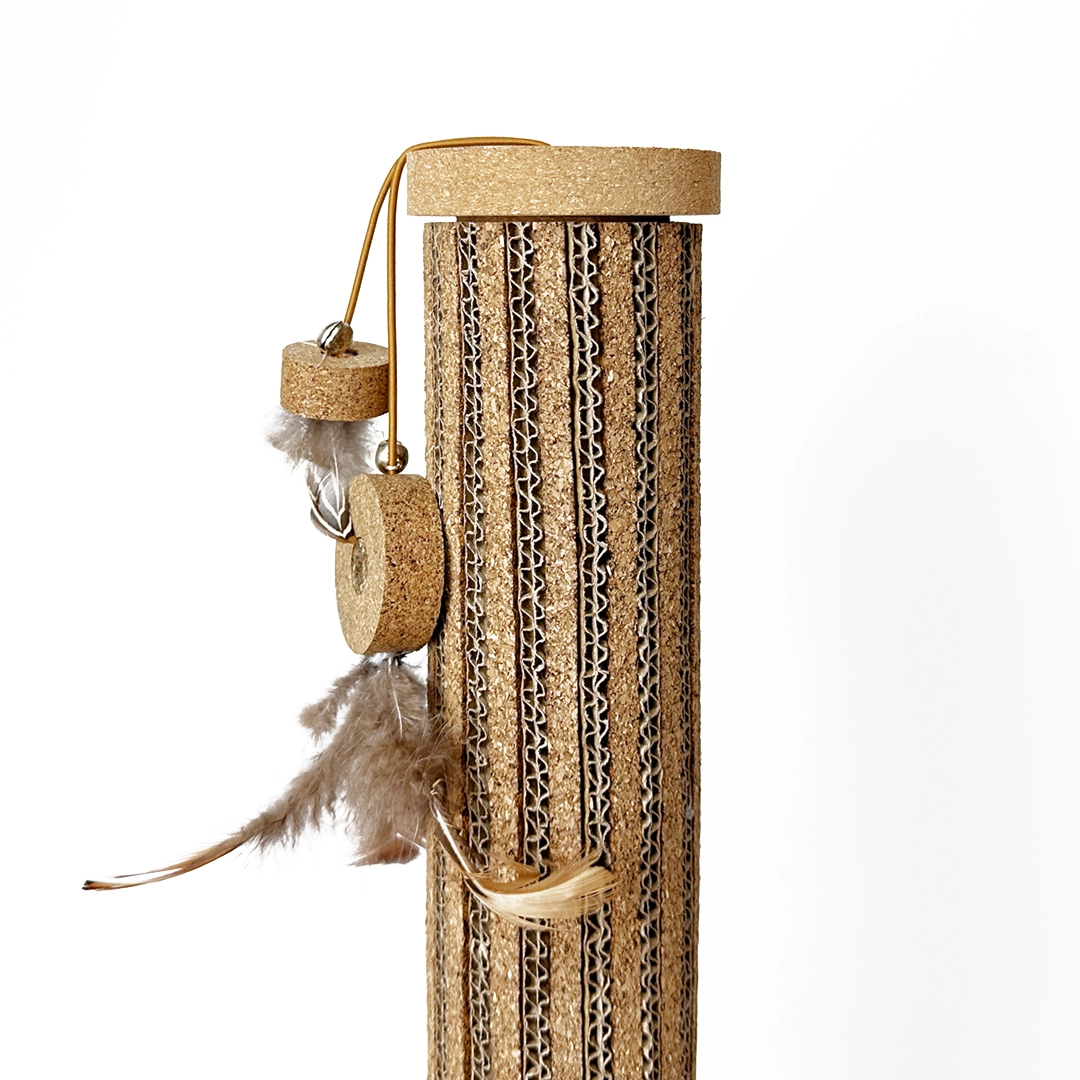
But the durable construction is what seals the deal. You want a post that doesn’t start sagging or becoming wobbly after a few weeks of use. A solid base, combined with replaceable scratching parts, extends the life of the post significantly. The last thing you want is to replace the whole thing every few months—that’s bad for your wallet and bad for the planet.
Replaceable parts make it sustainable
One underrated feature of a well-built scratching post is the ability to replace the scratching surface itself. The scratching area takes the most wear and tear, and eventually even the toughest materials get frayed. If you can swap out just that part instead of throwing away the entire structure, you save money and reduce waste. This is especially important for heavy scratchers who go through surfaces quickly. A large cat scratching post with replaceable parts isn’t just convenient—it’s designed for the long haul.
The Right Kitten Scratching Post Sets the Tone for Life
Kittens are still learning what they like
If you have a kitten, now is the golden period to shape their scratching preferences for life. Kittens under eight weeks old are still figuring out what textures feel good and what surfaces they’re drawn to. Introducing a quality kitten scratching post early—one with natural surfaces like cork or sisal—helps them build good habits before bad ones take root.
Training without punishment
Never punish a kitten for scratching furniture. It doesn’t work and only creates fear. Instead, make the right option irresistible. Place the post near their sleeping area or in the spots they’ve already shown interest in. Use play to lure them toward it. Reward them when they engage with it. Positive reinforcement turns the kitten scratching post into a natural part of their routine, not something they avoid.
Give them a tall, stable post early on, and they’ll grow up knowing that’s where they scratch. It’s much easier to prevent a bad habit than to fix one later.
How to Place and Introduce a Large Cat Scratching Post
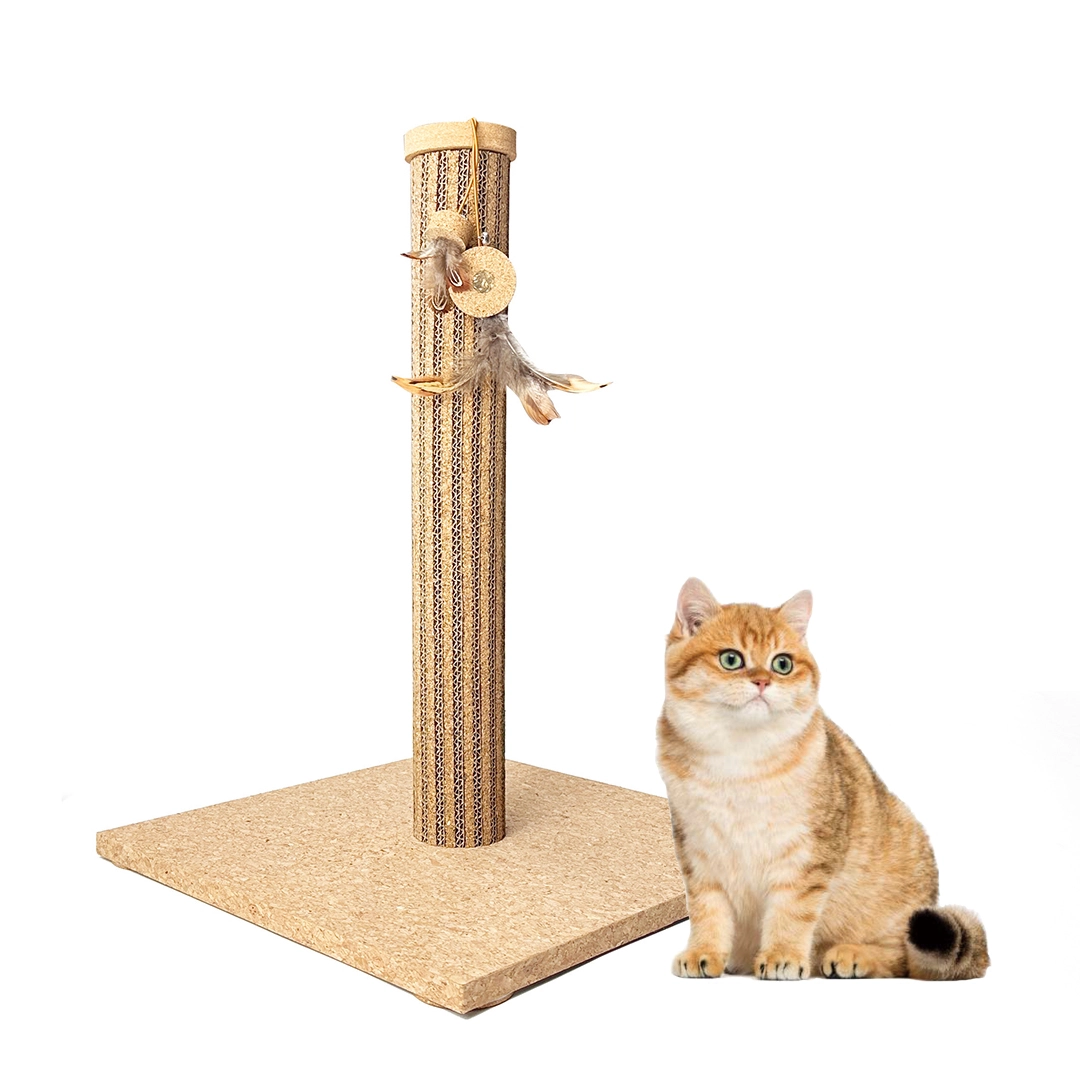
Location matters more than most people realize. Putting a cat scratching post in an out-of-the-way corner is a mistake. Your cat won’t seek it out. You need to put it where they already like to scratch—near the sofa they’ve been targeting, or beside their favorite window where they like to survey the world.
When you bring home a large cat scratching post, don’t just set it down and hope for the best. Guide your cat to it. Sprinkle catnip on it. Drag a toy across the surface to encourage them to touch it with their paws. Let them sniff, explore, and get comfortable. The first few interactions should be positive and low-pressure.
If your cat is stubborn, moving the post closer to their usual scratching spot can make a huge difference. You’re redirecting a habit, not fighting it. With patience, even the most furniture-obsessed cat can learn to choose a large scratching post instead.
Author:
Emily

You May Like
0Related Industry Knowledge