
Why This "Cork Ball" Is Revolutionizing Your Relaxation Experience
If you're still sweating it out with a foam roller or getting your hands numb from the vibrations of a massage gun, you absolutely need to meet the Cork Massage Ball.
It's as light as an egg, as firm as a golf ball—yet it can precisely "dismantle" those stubborn muscle knots in the tightest spots on your body.
1. Why Cork? — More Precise Than a Foam Roller, Gentler Than a Massage Gun
The market is flooded with all kinds of massage tools—so why has the cork massage ball managed to stand out from the crowd? The answer lies in its material.
Natural cork has a density of approximately 350 kg/m³, which gives it a perfect balance: firm enough, but not too hard.
Foam rollers: Great for large-area muscle relaxation, but completely useless for trigger points in "hard-to-reach" areas like the shoulder blade crevices, the soles of your feet, or your forearms. The small surface area of a cork massage ball allows pressure to penetrate deep into the tissue, loosening even the most stubborn trigger points.
Massage guns: They use high-frequency vibrations to "shake" muscles apart, but the intensity is hard to control—and hitting a bone is downright painful. The cork massage ball, on the other hand, relies on your own body weight, giving you complete control over the pressure—precise and safe.
Simply put: a foam roller is for "general cleaning"; a cork ball is for "targeted bomb disposal."
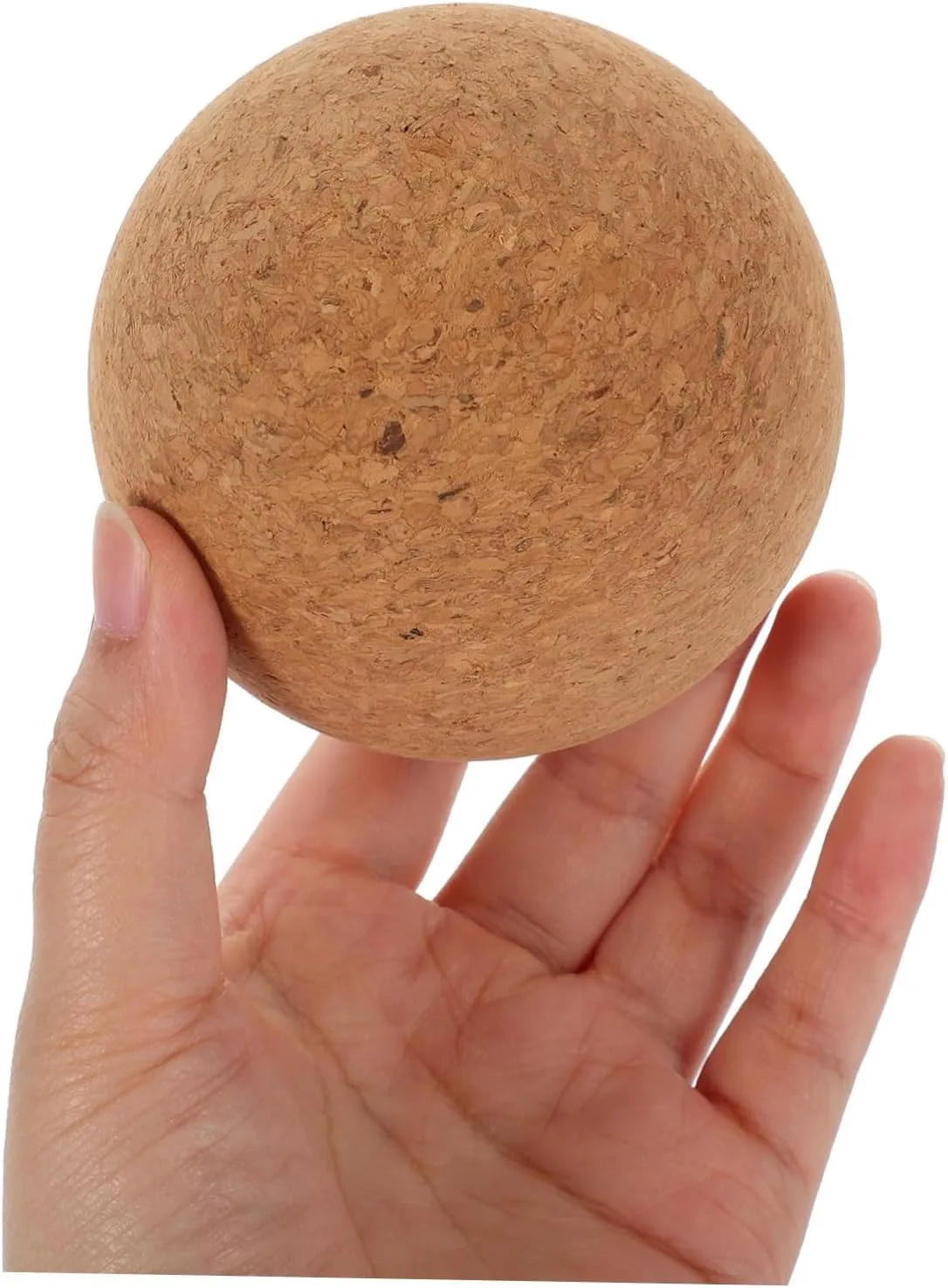
2. Not Just "Hard" — The Hidden Perks of Cork
Cork became the material of choice for massage balls for reasons far beyond just the right firmness.
Naturally antibacterial
Cork has natural antibacterial properties, so even with frequent use and sweat, you don't have to worry about bacterial growth. That's a huge plus for a massage tool that comes into repeated contact with your skin.
Skin-friendly and non-slip
The surface of cork feels natural to the touch. Even if your skin gets slightly sweaty, it still maintains a non-slip grip—unlike plastic or rubber balls that tend to slide around.
Eco-friendly and sustainable
Cork is the bark of the cork oak tree. After harvesting, the bark regenerates—no trees are cut down. Many brands make their cork massage balls from 100% recycled cork or sustainably sourced cork, with zero-plastic packaging. With one ball, you're doing a little something for the planet, too.
Light enough to "forget" it's there
A 5 cm cork massage ball weighs only about 20 grams. Toss it in your bag and you'll barely notice it—perfect for business trips, travel, or the gym.
3. How to Use It — Against the Wall, on the Floor, With Your Body
Using a cork massage ball is incredibly simple. The core principle boils down to one sentence: *use your body weight to "press" into it.*
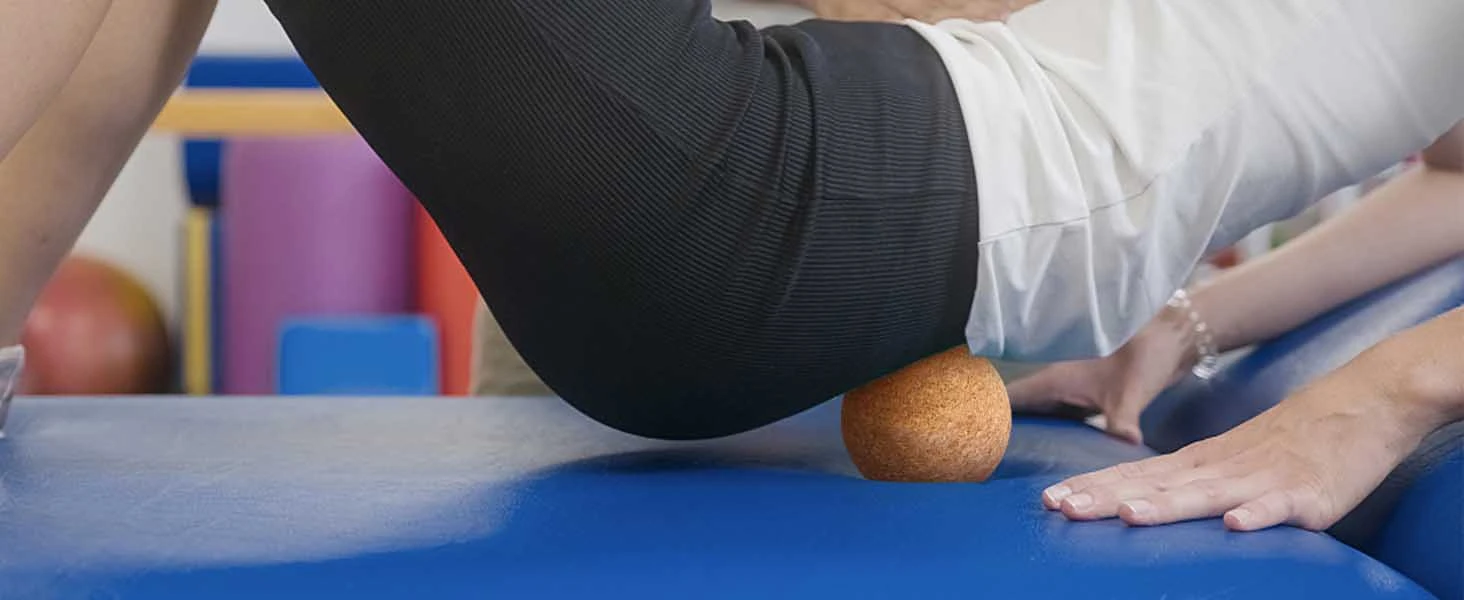
1. Position: Place the cork massage ball between the muscle you want to relax and a wall or the floor.
2. Apply pressure: Slowly lean your body weight into it, letting the ball sink into the muscle.
3. Hold or roll: Hold on a trigger point for 10–30 seconds until you feel the tension release, or slowly roll along the muscle fibers.
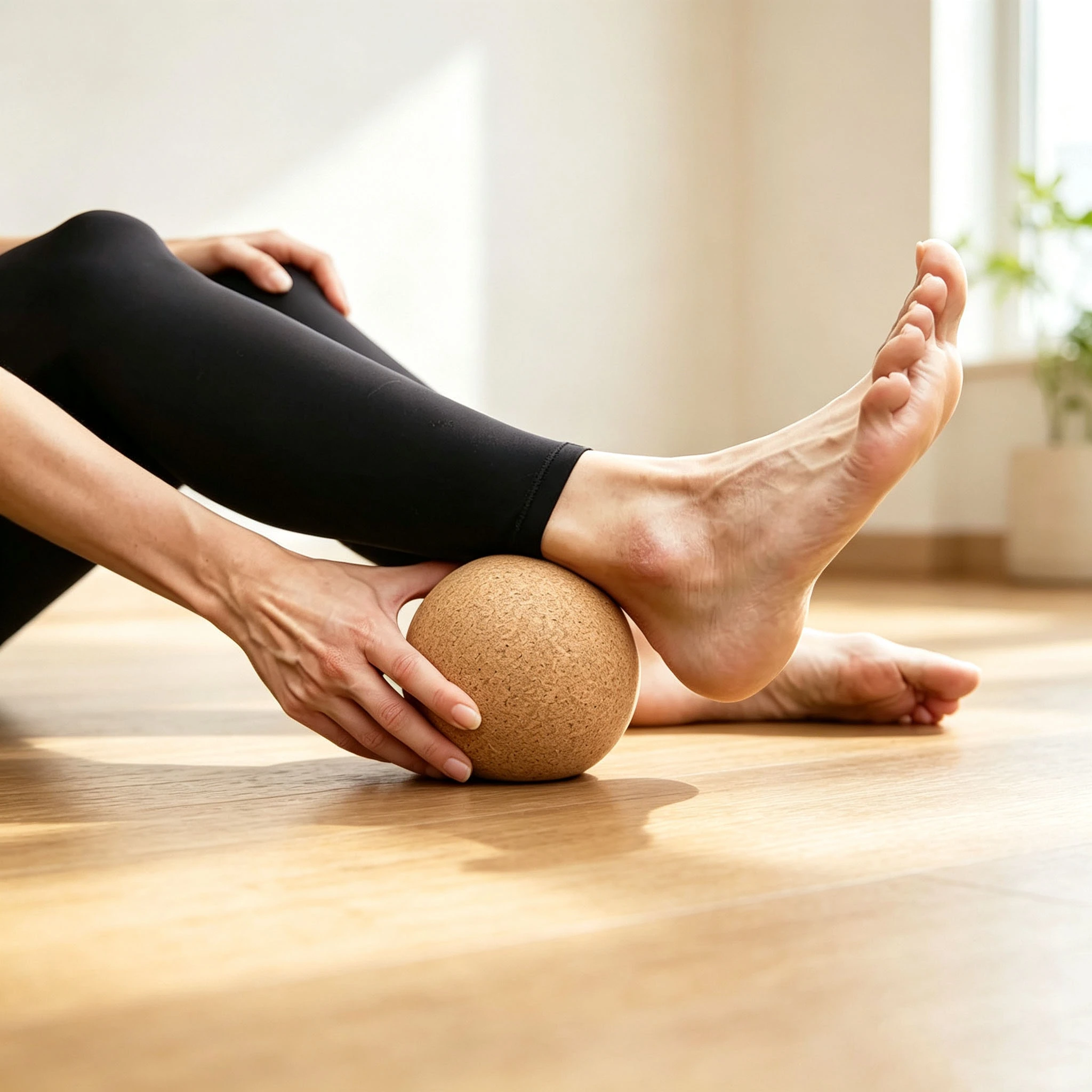
4. Tune in: You should feel a "good pain"—a sore but pleasant sensation. If you feel sharp stabbing pain or numbness, stop immediately.
Tips for controlling pressure
Beginners, start against the wall: When using a wall, you can adjust the pressure by changing the angle of your body—much easier to manage than on the floor.
Advanced, go to the floor: Lying on the floor uses your full body weight for deeper pressure, ideal for larger muscle groups like the glutes and back.
Which areas does it work for?
Size Best for Use Case
5 cm: Suitable for hands, soles of the feet, calves, forearms, and neck—for targeted pressure on trigger points in small muscle groups.
6.5–8 cm: Suitable for shoulders, hamstrings, glutes, and back—for relaxing large muscle groups.
10 cm: Suitable for the chest, and can also be used as a substitute for a foam roller—for broad-area relaxation.
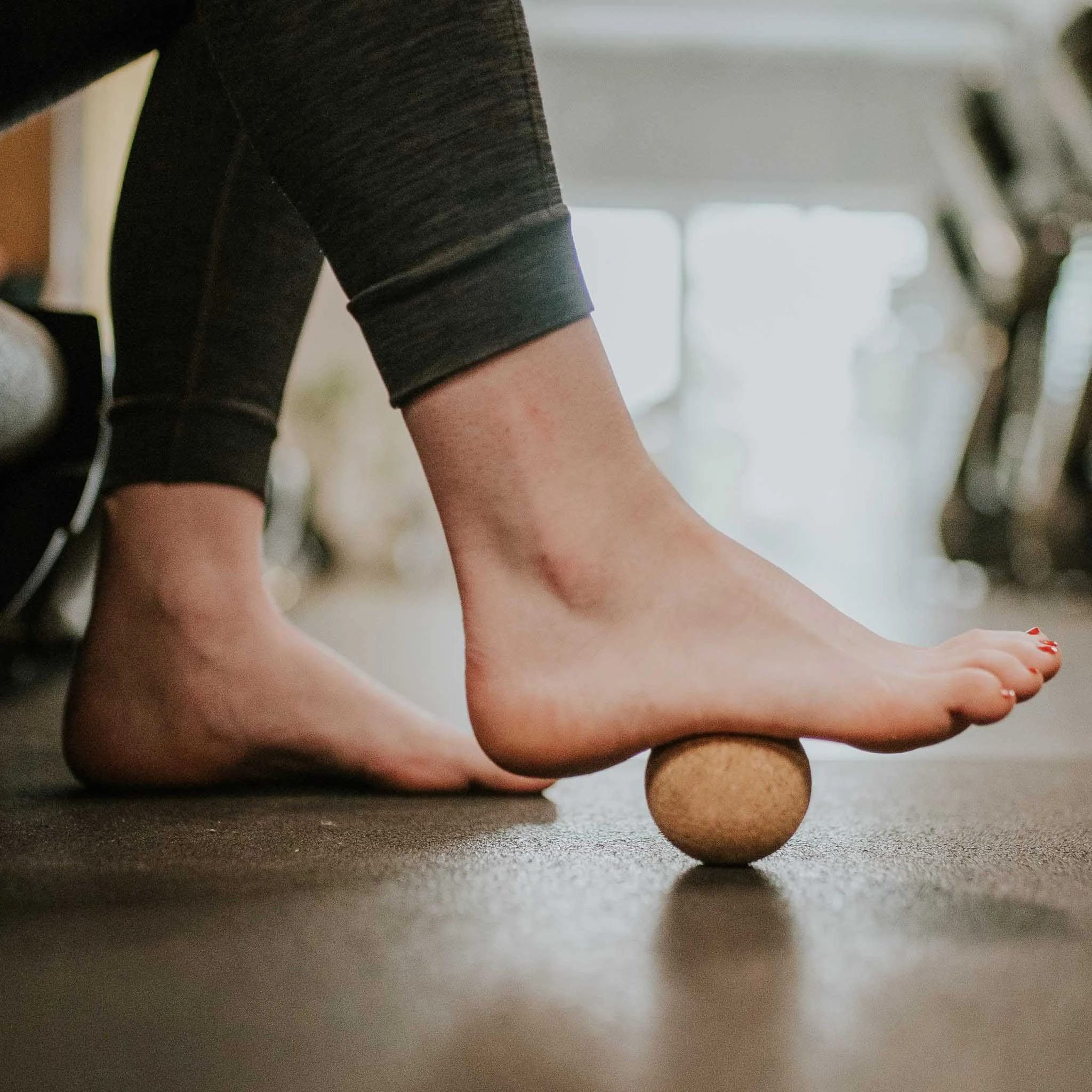
Special recommendation: For plantar fasciitis sufferers, rolling a 5 cm cork ball under the foot delivers excellent results.
Care & Maintenance — Make It Last Longer
Caring for your cork massage ball:
Daily cleaning: Wipe with a damp cloth. If you use soap or a mild cleaner, dry it with a dry cloth afterward.
Dry thoroughly: If the ball gets wet, let it air-dry in a well-ventilated area—do not expose it to direct sunlight.
Avoid soaking: Do not submerge the cork ball in water for extended periods.
Final Thoughts
The cork massage ball isn't some high-tech marvel. It simply returns to the very essence of massage—using just the right amount of pressure to awaken your body's own ability to heal itself.
It doesn't need electricity, doesn't take up space, doesn't cost a fortune—yet it can help you dismantle those "years-old knots" in your muscles anytime, anywhere. Whether you're a desk-bound office worker, a fitness enthusiast, or just someone who wants to relax their feet before bed, this little cork ball deserves to be part of your daily self-care routine.
Author
FAQ
1. Q: What is the biggest difference between a cork massage ball and a foam roller?
A: A foam roller is like a "deep clean" – great for loosening up large areas. A cork ball, on the other hand, is like "targeted bomb disposal" – designed precisely for deep trigger points in tricky spots like between the shoulder blades or the arch of the foot.
2. Q: Is it unhygienic to use it after sweating during exercise?
A: Not at all. Cork has natural antibacterial properties, so even with frequent skin contact, it resists bacterial growth better than ordinary plastic or rubber balls.
3. Q: Is it slip-resistant? Will it slide around if I'm sweaty?
A: Quite the opposite. The cork surface is skin-friendly and non-slip. Even with light sweat, it stays firmly against your skin without sliding around like plastic balls.
4. Q: I'm an office worker who sits for long hours. What size should I get?
A: We recommend 5 cm. This size is especially effective for relaxing smaller muscle groups that tend to get tight from desk work – like the soles of the feet (great for plantar fasciitis), forearms, and neck.
5. Q: How do I clean it after prolonged use? Can I soak it in water?
A: Just wipe it with a damp cloth, and occasionally use mild soap. Never soak it in water for long periods, and don't leave it in direct sunlight. Instead, dry it off and let it air-dry naturally in a well-ventilated place.

You May Like
0Related Industry Knowledge