
What Makes a Good Cork Bulletin Board Roll? A Quality Checklist
Introduction
A bulletin board looks simple. A cork surface, a backing board, maybe a frame. But the pinboard cork roll used as the face material is what determines whether the board looks good, lasts long, and feels right to the touch.
Not every cork roll is suitable for this application. Some have white spots, some wrinkle during storage, some feel rough, some smell damp. These are not minor issues — they affect the final product directly.
This guide covers what to check before you buy a pinboard cork roll, and why each quality point matters.
Surface Consistency – No White Spots, No White Lines
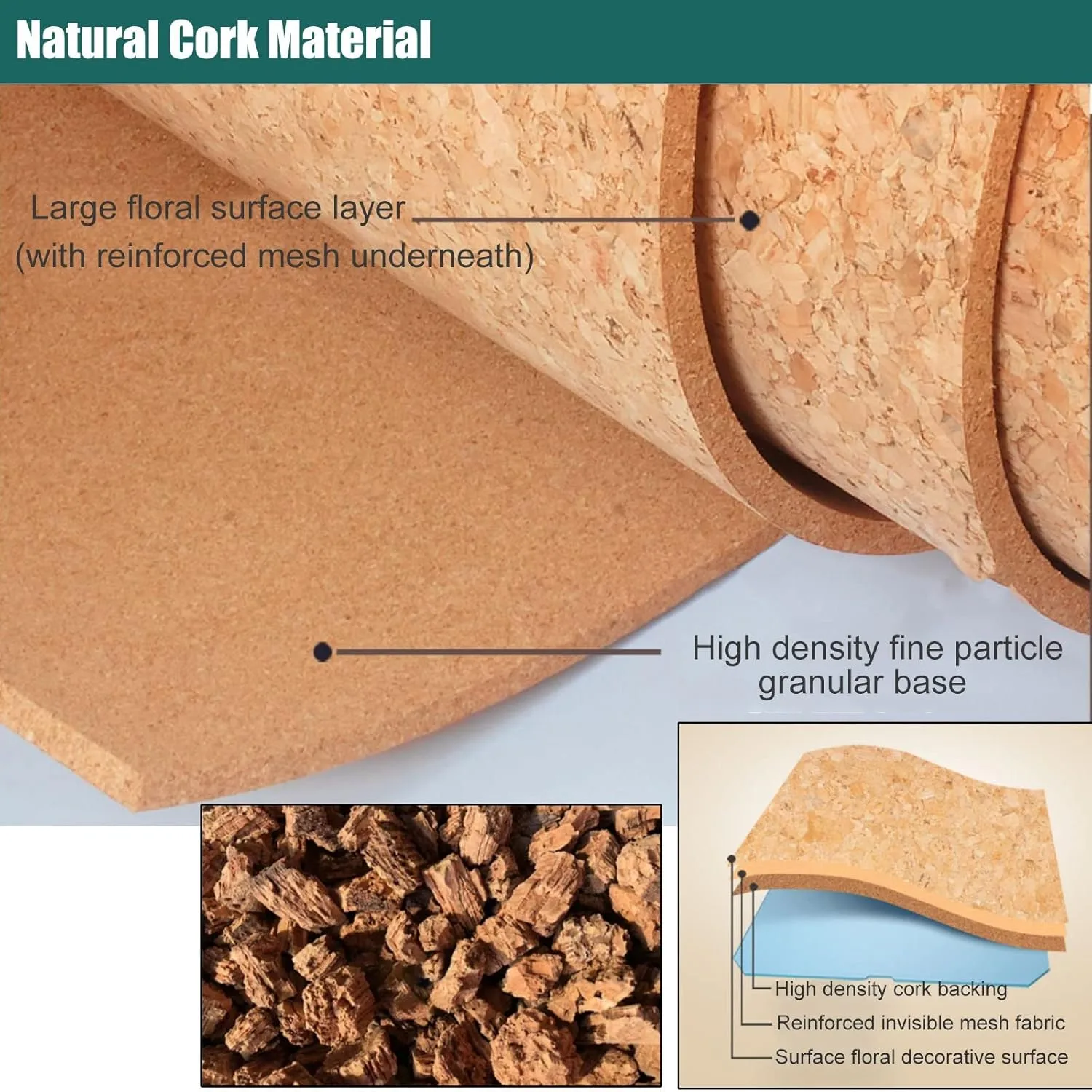
The first thing people notice on a bulletin board is the surface. It needs to be visually consistent — no white spots, no white lines, no obvious color variation.
White spots or lines can come from several sources:
|
Cause |
Explanation |
|
Poor particle grading |
If fine and coarse granules are not properly balanced, fine powder concentrates in certain areas, creating lighter patches |
|
Uneven adhesive distribution |
Too much or too little glue in certain zones affects color development |
|
Inconsistent pressing |
Variations in temperature or pressure during compression lead to density differences, which show up as visual inconsistency |
|
Dust residue |
Fine dust trapped in the surface creates a dull, greyish appearance |
A good cork bulletin board roll should have uniform color across the entire surface. This is not just an aesthetic issue — it signals that the manufacturing process is under control.
No Wrinkles
Wrinkles are one of the most common complaints with cork rolls. They can form during winding, storage, or transport.
Once a wrinkle forms, it cannot be fully removed. When the cork roll is laminated onto a backing board, the wrinkle remains visible. In some cases, it creates air pockets that affect adhesion.
Wrinkles usually come from:
Uneven winding tension
Improper storage (stacked under weight, exposed to humidity)
Sudden temperature changes during transport
A quality pinboard cork roll should arrive flat, smooth, and free of creases. If wrinkles are present before lamination, they will be present in the final product.
Flexibility and Strength
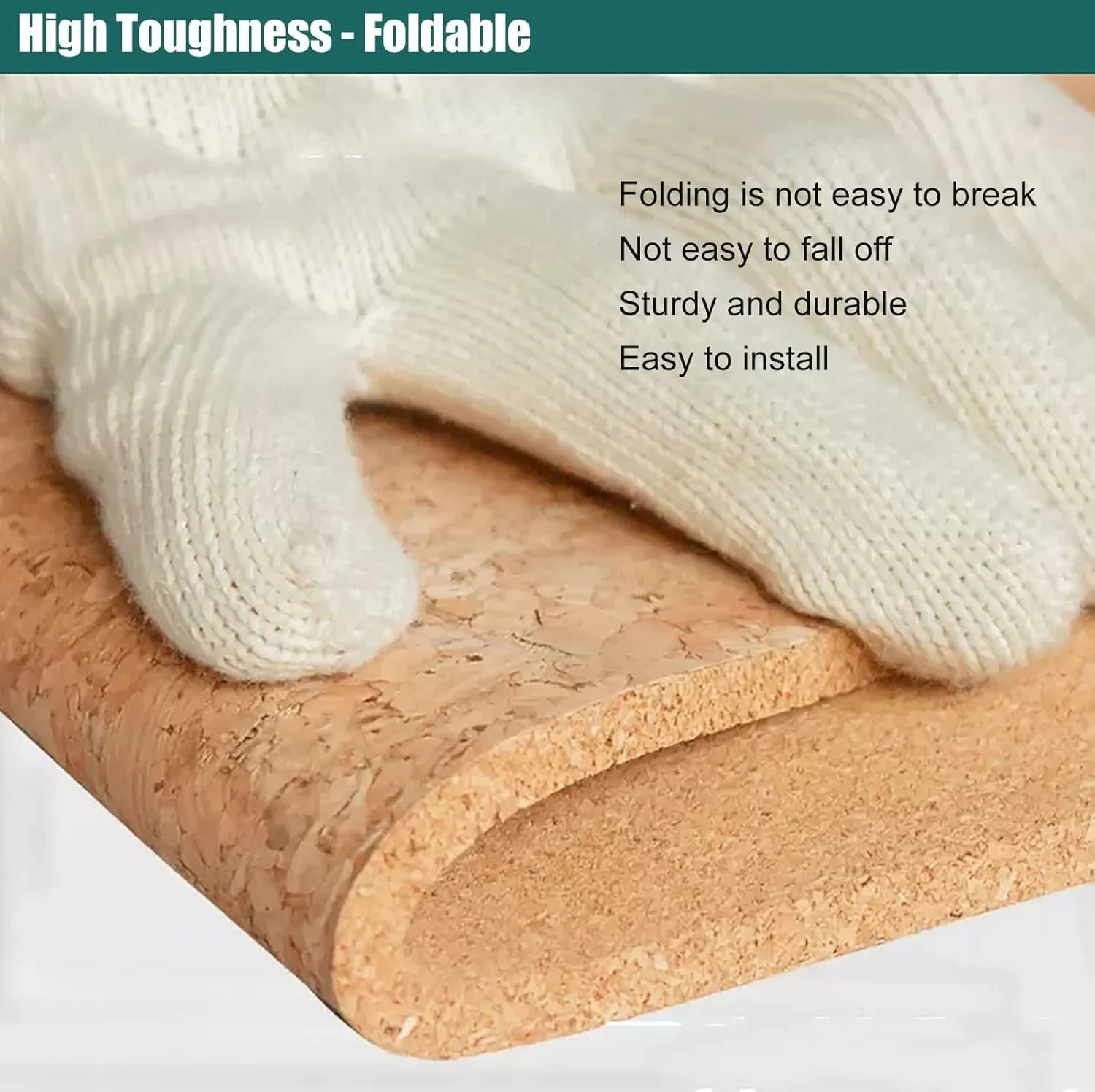
Cork rolls need to be flexible enough to handle without breaking, but strong enough to withstand handling and lamination.
If the roll is too brittle, it can:
Crack during unrolling
Break during lamination
Tear during edge trimming
Flexibility is influenced by:
Moisture content (too dry = brittle; too wet = weak)
Adhesive type and amount
Particle size and distribution
A good pinboard cork rollshould bend without cracking and maintain its integrity through normal handling.
Smooth Surface – No Sharp Particles
The surface of the cork roll should feel smooth to the touch. It should not have sharp particles that prick the skin or create a rough, uneven feel.
This matters for several reasons:
Safety — bulletin boards are often used in schools, offices, and public spaces
Touch experience — people pin notes, touch the surface, brush against it
Lamination quality — a rough surface does not bond as well to the backing board
Smoothness is achieved through proper grinding, grading, and surface treatment. It is not something that can be fixed after production.
Odor Control – No Damp or Earthy Smell
Cork has a natural, subtle woody scent. That is normal. But a cork bulletin board roll should not smell damp, musty, or earthy.
These odors usually come from:
Excessive moisture during production — often caused by adding too much water during dust removal or cooling
Incomplete drying — residual moisture trapped inside the roll
Poor storage conditions — high humidity or lack of ventilation
A damp smell is not just unpleasant — it indicates that the moisture content is too high, which can lead to mold, mildew, and delamination over time.
Quality cork rolls are dried to a stable moisture content, typically between 5% and 11% . They should smell like cork, not like a basement.
Thickness Tolerance
Thickness consistency is critical when the cork roll is used as a face material.
If thickness varies:
Lamination pressure becomes uneven
The surface may show bumps or dips
Die-cutting and edge trimming become difficult
The final board may not sit flat
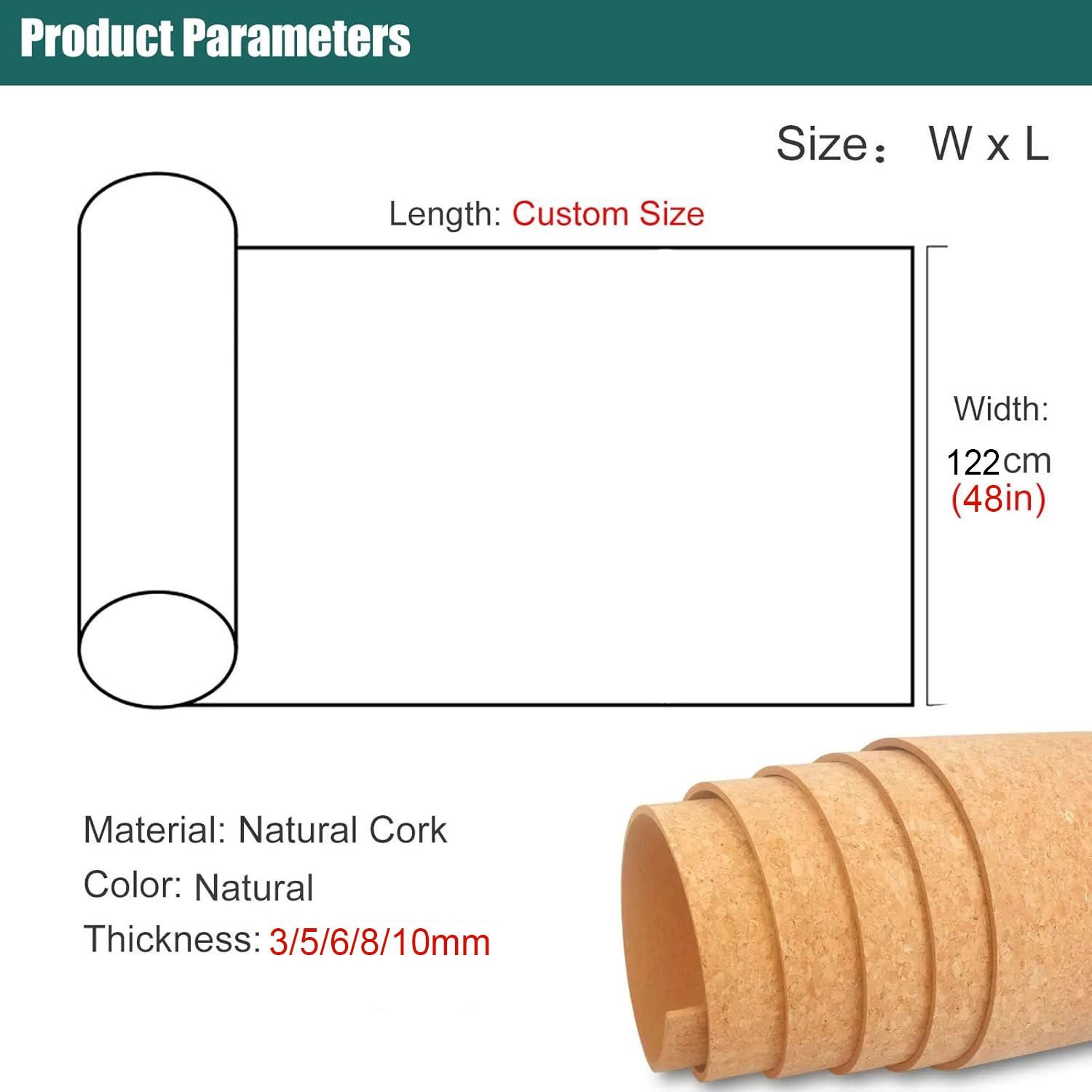
A good pinboard cork roll should have tight thickness tolerances. This is especially important when the cork is thin (0.8mm or similar) because small variations are more noticeable.
Density Uniformity
Thickness is not the only dimensional factor. Density uniformity matters too.
If density varies across the roll:
Some areas feel harder than others
Lamination results become inconsistent
Cutting and punching behave differently across the surface
Density uniformity comes from consistent particle distribution, uniform adhesive application, and controlled pressing parameters.
Winding Tension and Roll Formation
The way the cork roll is wound affects everything downstream.
Too tight — creates tension wrinkles and makes unrolling difficult
Too loose — allows the roll to shift during transport, causing creases and edge damage
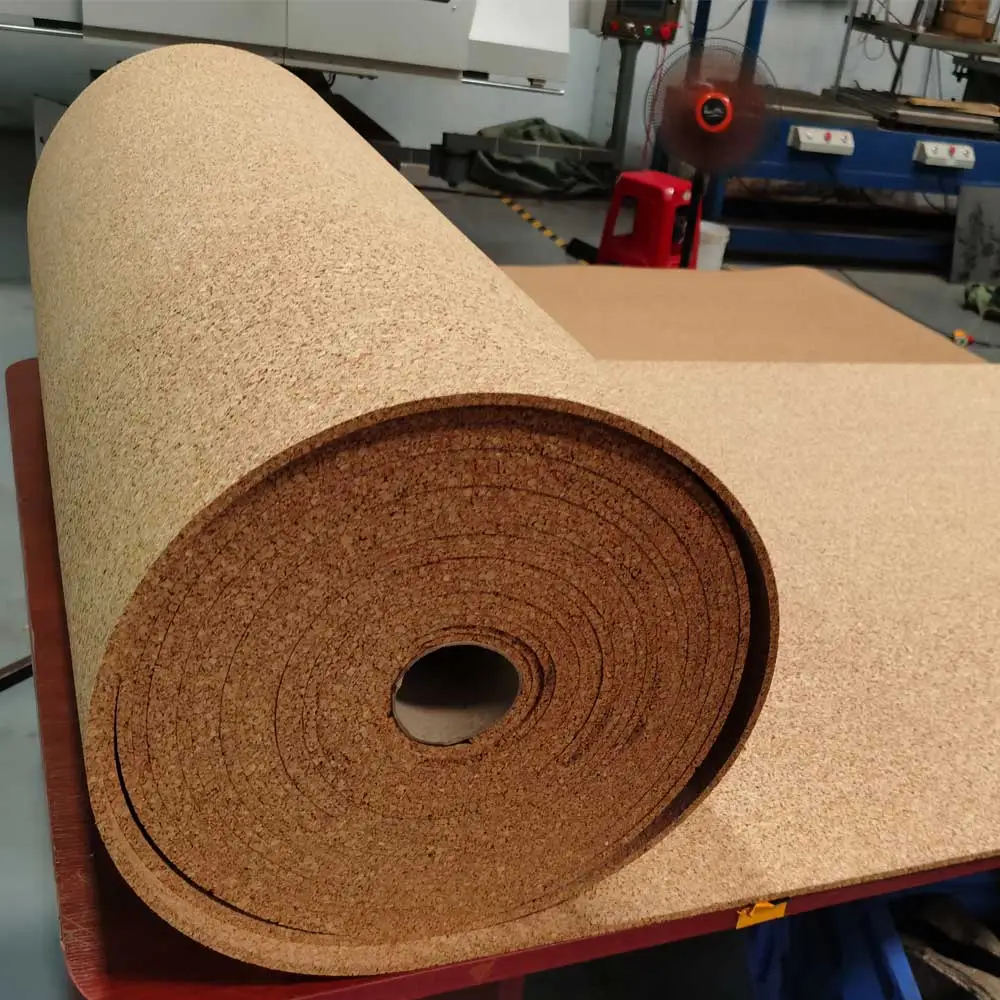
A well-wound pinboard cork roll should unroll smoothly, lie flat, and maintain consistent tension from the outer layers to the core.
Lamination Compatibility
The cork roll is only the face material. It needs to bond well with the backing board — usually MDF, particleboard, or a self-adhesive layer.
For good lamination:
The surface should be clean, dust-free, and smooth
Thickness should be uniform
The roll should be flat, with no wrinkles or waves
Moisture content should be stable
If any of these conditions are not met, the final board may show bubbles, lifting, or uneven surfaces.
Certification and Compliance
For bulletin boards used in schools, offices, or public buildings, additional requirements may apply:
Low VOC — for indoor air quality
REACH / RoHS / CA65 — for chemical compliance
Fire resistance — for commercial spaces
A quality cork bulletin board roll should be able to provide relevant test reports on request.
How to Check Before You Buy
|
Check |
What to Do |
|
Color consistency |
Unroll a section and look for white spots or lines |
|
Wrinkles |
Check for creases, especially near the core and edges |
|
Flexibility |
Gently bend a small piece — it should not crack |
|
Surface feel |
Run your hand across the surface — no sharp particles |
|
Odor |
Smell the roll — should be neutral, not damp or earthy |
|
Thickness |
Measure at several points — should be consistent |
|
Moisture |
Ask for the moisture content spec (5–11%) |

Conclusion
A pinboard cork roll is not just a commodity. It is a face material that determines how the final product looks, feels, and performs.
Surface consistency, wrinkle-free formation, flexibility, smoothness, odor control, thickness tolerance, density uniformity, and lamination compatibility — these are the factors that separate a good cork roll from an average one.
If you are sourcing cork rolls for bulletin boards, use this checklist. It will help you avoid the most common quality problems before they reach your production line.
FAQ
How should I store cork rolls before use?
Store in a cool, dry place, away from direct sunlight and heavy pressure. Keep the roll horizontal to avoid deformation.
Can I order a custom width or thickness?
Yes, most suppliers offer custom sizes, but check MOQ and lead time first.
How do I know if the cork roll is right for my backing board?
Ask for a sample and test lamination before placing a bulk order.

You May Like
0Related Industry Knowledge