
The Oval Yoga Mat: Why Your Rectangular Mat Is Boring
Let’s be honest: the standard rectangular yoga mat is fine. It does the job. But “fine” doesn’t exactly inspire you to unroll it after a long day of work. Enter the oval yoga mat—a slightly weird, surprisingly functional, and undeniably stylish alternative that’s been quietly gaining traction among yogis, Pilates enthusiasts, and home workout lovers across the US and Europe.
I was skeptical at first too. A mat without corners? Doesn’t that defeat the purpose of alignment? After testing one for a month and talking to people who swear by them, I get it now. Here’s the honest breakdown.
It’s Not Just About Looks (But Yes, It Looks Great)
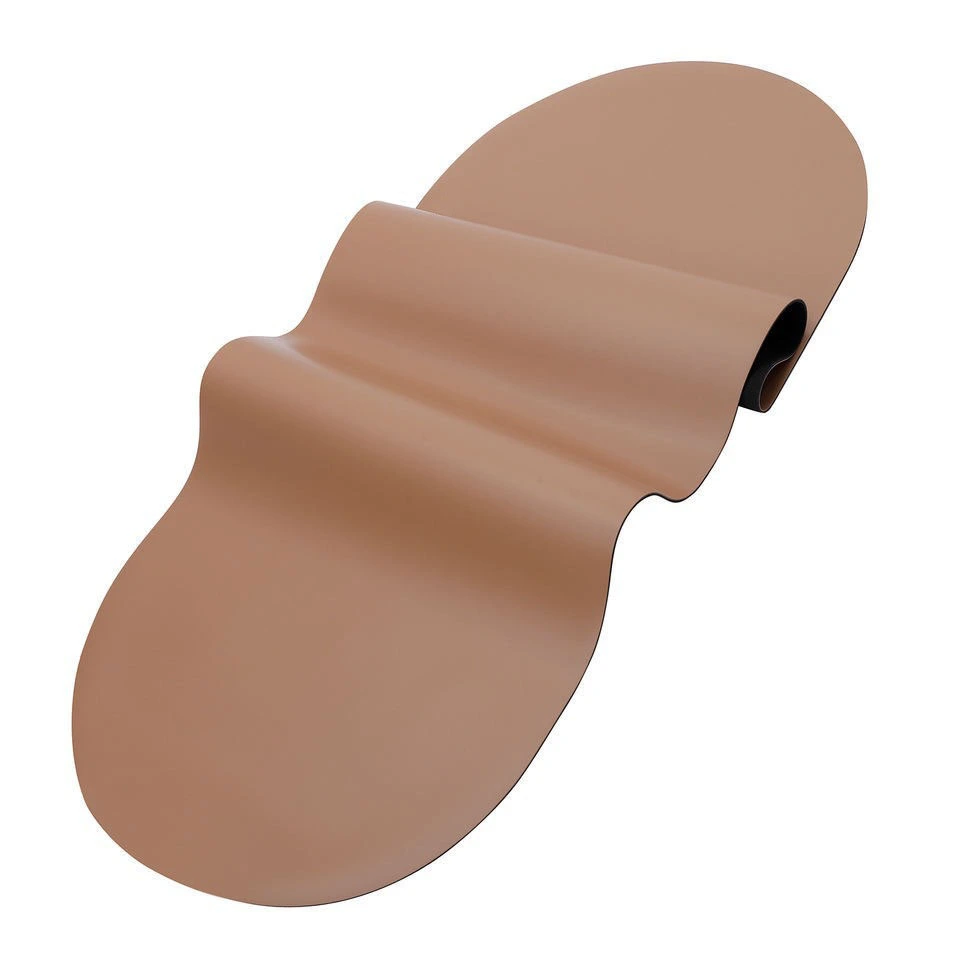
The first thing people notice about an oval yoga mat is the shape. It’s typically inspired by surfboard silhouettes or elongated ovals, with gently curved edges instead of sharp corners . The visual effect is softer, more organic. One European brand, Yogalaxy, explicitly markets its oval mats as decor pieces you can leave rolled out in your living room without it looking like gym equipment .
But there’s a functional argument buried under the aesthetics. According to the founder of Yogalaxy, the curved shape is meant to promote “natural energy flow” and harmony, borrowing loosely from Feng Shui principles about organic forms . I’m not going to pretend I felt my chi circulating differently. What I did notice was that the absence of corners made the mat feel more inviting—less like a rigid rectangle demanding perfect alignment and more like a space to move.
The Real Question: Does It Actually Work for Practice?
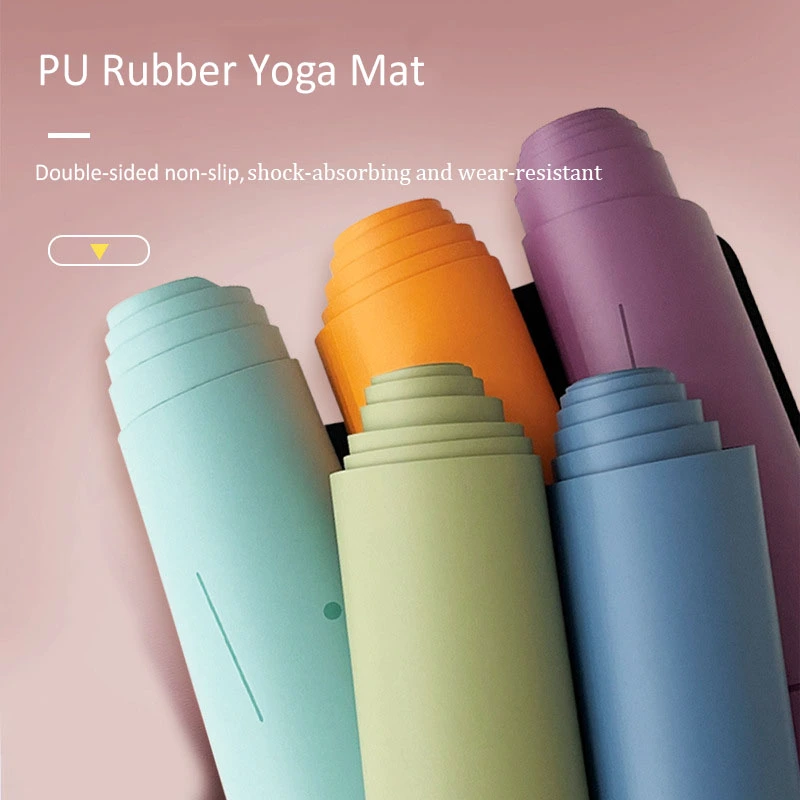
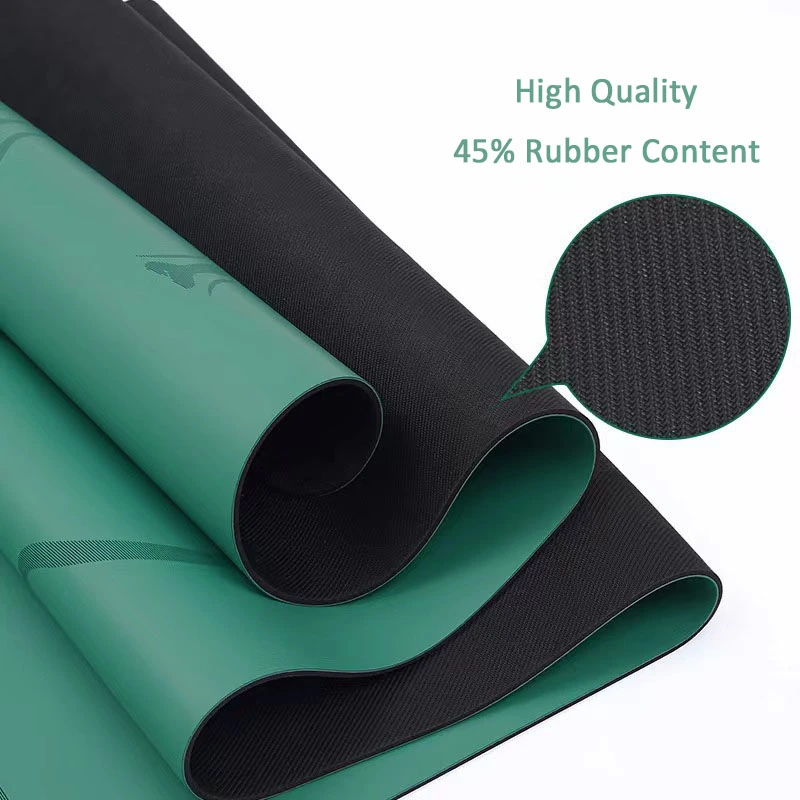
Here’s where things get practical. Most oval yoga mats on the market are not flimsy novelty items. They’re typically 5mm to 6mm thick, made from materials like natural rubber, PU, or TPE, and designed for serious grip .
I spoke with a Pilates instructor in Berlin who switched her studio’s loaner mats to oval ones last year. Her take: “Clients who normally rush through transitions slow down. The shape subconsciously signals that this is not a treadmill. It’s a place to be intentional.” Her studio uses a 6mm oval mat from a European brand, and she noted that the curved edges actually helped during barre exercises where people tend to shift their weight laterally—there’s no corner to catch a toe or create a false sense of boundary .
A yoga teacher in Portland, Oregon, had a more pragmatic observation. She uses an oval mat for her personal practice because it fits her small apartment living room better than a long rectangle. “My rectangular mat always felt like it was trying to be a rectangle in my space,” she said. “The oval one just sits there nicely. It sounds dumb, but I use it more because it doesn’t annoy me visually.” That tracks with the design philosophy behind several oval brands: they’re meant to be left out, not stuffed into a closet .
The Trade-Offs You Should Know About
I won’t sugarcoat it. The oval yoga mat has real limitations.
First, if you’re a stickler for alignment lines or you practice Ashtanga with precise drishti points, the lack of corners and straight edges might feel disorienting. One reviewer on a European retailer’s site complained that during certain poses, her hands and feet went “over the boundaries of the mat,” and she wished for an oversized version . That’s a fair critique—oval mats typically measure around 180cm x 66cm, which is generous but not infinite .
Second, portability varies wildly. Some oval mats weigh around 2kg and come with carrying straps, making them manageable for studio commutes . Others tip the scales at 3kg or more, which is fine for home use but annoying if you’re hauling it to a class . And if you’re looking for an ultralight travel mat, this probably isn’t it. The oval shape simply doesn’t pack down as compactly as a thin, foldable rectangle.
Third, price. These aren’t budget Amazon finds. A Casall oval mat runs about €96 . A Party Pilates oval mat retails for nearly $200 . You’re paying for design, niche manufacturing, and often premium materials like natural rubber or vegan suede microfiber.
Who Is This Actually For?
Based on the user reviews and product specs I dug through, the oval yoga mat makes the most sense for three types of people:
The home practitioner with visible living space. If your mat lives in your living room or bedroom and you care about how your space looks, an oval mat is a genuine upgrade. It reads as a design object, not a piece of sporting goods .
Pilates, barre, and sculpt enthusiasts. Several oval mats are explicitly marketed for these disciplines, and the slightly wider, curved footprint accommodates lateral movements better than a narrow rectangle . A studio owner in Florida left a review saying her clients constantly compliment the shape and ask where to buy them .
People who need a mental reset. This sounds woo-woo, but multiple brands lean into the psychological effect of the shape. One reviewer described the oval form as making her practice feel “more like a ritual and less like a workout” . If your current mat feels utilitarian and you want your practice space to feel a little more special, the shape does something—even if it’s purely psychological.
Final Thoughts
The oval yoga mat is not for everyone. If you need precise corners for alignment, travel frequently with your mat, or refuse to spend more than $50, stick with a rectangle. But if you practice at home, care about the visual vibe of your space, and want a mat that feels a little less like a gym accessory and a little more like something you want to unroll, it’s worth considering.
I kept expecting the novelty to wear off. A month in, I still reach for the oval one first. Maybe it’s the shape. Maybe it’s the grip. Or maybe it’s just nice to have a mat that doesn’t look like every other mat in every other studio. Sometimes that’s enough.
Author
info@leecork.com
FAQ
Q1: What's the biggest difference between an oval yoga mat and a regular rectangular mat?
A: The shape. An oval has no sharp corners, so you're not visually "boxed in," and it's better suited to circular, flowing movements.
Q2: Is it really better than a rectangular mat?
A: People who practice Vinyasa flow, Pilates, or barre will find it feels more natural.
Q3: Is an oval mat suitable for Pilates?
A: Very much so. Most oval mats are wider than standard yoga mats (about 66cm), which solves the problems of "stepping off the mat" and slipping when doing floor-based Pilates in socks.
Q4: Does it look good laid out at home?
A: That's one of its strengths. It fits the "athleisure home" aesthetic perfectly.
Q5: What three things should I confirm before buying?
A: ① Dimensions; ② Surface material; ③ Weight.

You May Like
0Related Industry Knowledge