
Granulated Cork: Can It Replace Microplastics in Turf?
Every time a footballer steps onto an artificial turf pitch, they leave behind more than sweat. They leave microplastics — tiny plastic fragments that don't disappear. They accumulate. In the soil, in the water, and eventually, in us.
Artificial turf has been around since the 1960s, with the first major installation at the Houston Astrodome in 1966. Today, it's everywhere: football pitches, school playgrounds, tennis courts. The synthetic grass fibres are made from polyethylene (PE), polypropylene (PP), or nylon. That's plastic. And below those plastic blades, there's often another layer of plastic — rubber infill granules, usually made from recycled tyres.
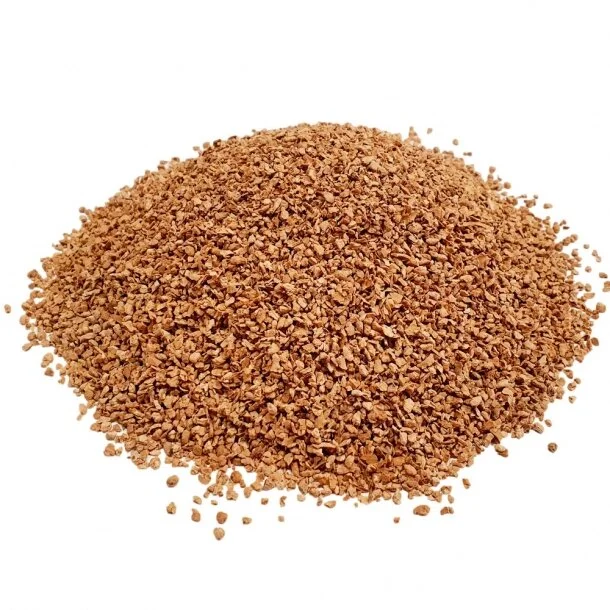
Granulated cork offer a different way.
What's Actually on a Typical Artificial Turf Pitch?
The structure is simpler than it looks. Most modern artificial turf systems use a three-layer design:
The base – compacted stone or concrete, for drainage and stability
The shock pad – rubber or foam cushioning underneath
The turf itself – synthetic grass fibres stitched into a backing
But the real issue is the infill — the loose material spread between the grass fibres to keep them upright and provide cushioning. For decades, the standard has been black rubber granules from recycled tyres, also known as SBR (styrene-butadiene rubber). It works. It's cheap. And it sheds microplastics constantly.
The Numbers Are Hard to Ignore
Estimates suggest artificial turf fields release around 16,000 tonnes of microplastics every year across Europe alone. The rubber granules break down through weather, UV exposure, and mechanical wear. They wash into drains, blow into neighbouring areas, and linger in the environment.
Microplastics are generally defined as plastic particles smaller than 5 millimetres. They've been found everywhere — from the deepest oceans to the highest peaks, and even in human bodies. Studies have detected microplastics in human blood, lungs, placenta, and brain tissue. The long-term health effects are still being studied, but the precautionary principle suggests we shouldn't wait for certainty before acting.
So Why Cork?
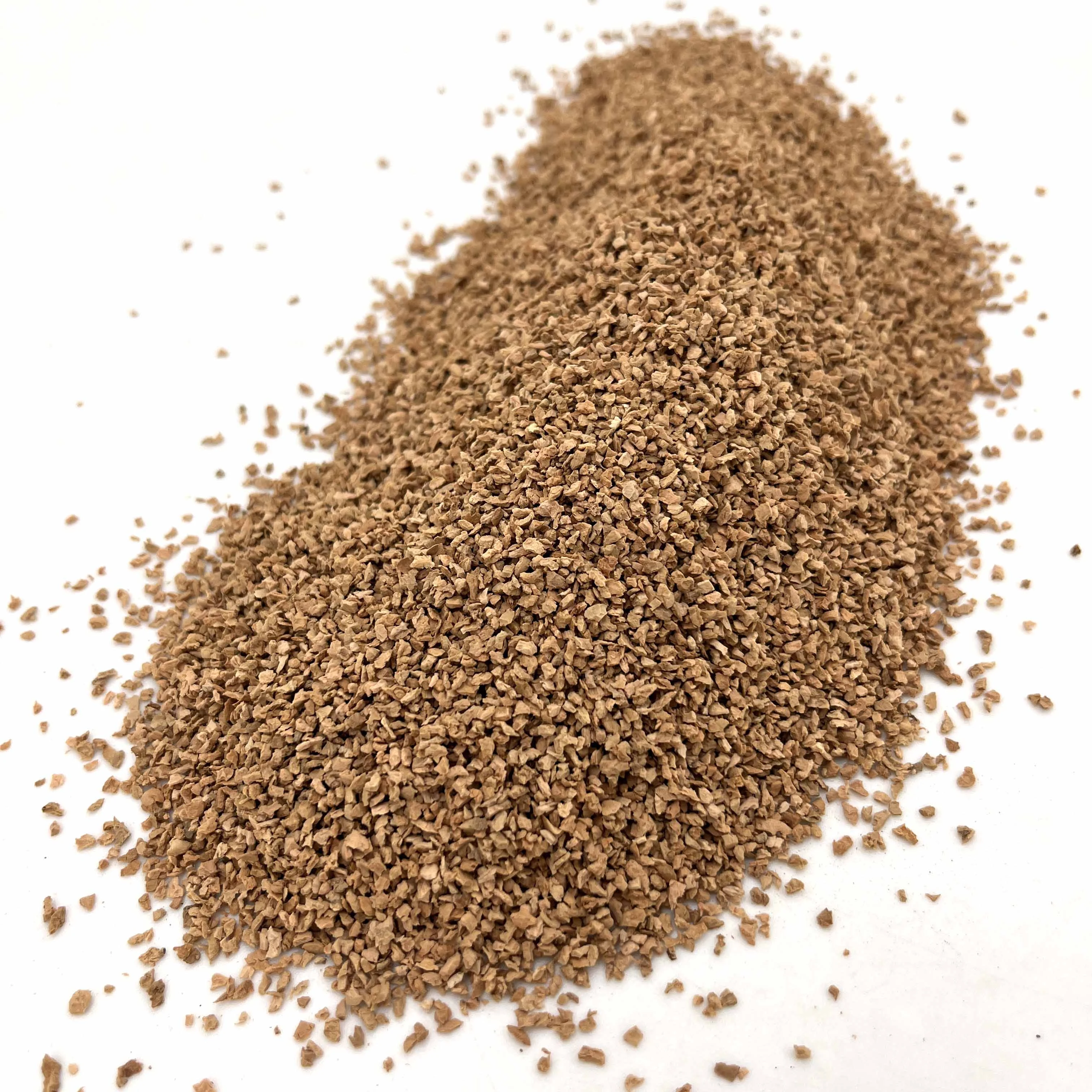
Granulated cork address the problem at its source: they replace plastic infill with a natural, plant-based material.
Cork comes from the bark of cork oak trees (Quercus suber). The bark is harvested every nine years without cutting down the tree — the bark regrows. The granules are made from cork waste left over from stopper production. That means no trees are felled specifically for turf infill.
And the performance? It's not a compromise. Granulated cork offers:
Good shock absorption – it cushion falls and impacts
Heat resistance – it stays cooler than black rubber in direct sunlight
No smell – unlike recycled tyres
Biodegradability – it breaks down naturally, without leaving microplastics behind
What Does the Science Say?
Research into cork as an artificial turf infill is growing. Studies have shown that cork-based infill systems can provide comparable mechanical performance to rubber-filled systems, particularly in terms of impact absorption and player safety. The material's natural elasticity and cell structure help absorb energy effectively.
Some manufacturers have already developed cork-based infill products for artificial turf applications, positioning them as a sustainable alternative to traditional rubber or TPE infills. The key advantage is simple: granulated cork perform like plastic, but degrade like wood.
The European Regulatory Context
The European Union is moving towards stricter regulations on microplastic pollution. Under the new regulations on synthetic polymers, certain plastic infill materials will face restrictions in the coming years. While the specific timelines are still being finalised, the direction is clear: plastic infill is not the long-term solution.
Granulated cork offers a ready-made alternative that's already available, already tested, and already in use on real pitches.
What About Cost?
This is the question that always comes up. Cork infill generally costs more than rubber infill — that's true. But the gap is narrowing as demand increases and production scales up. And when you factor in the environmental cost of plastic, the lifetime cost of field maintenance, and the potential regulatory risks of sticking with plastic, cork starts to look like a smart investment rather than a luxury.
Some pitch owners also report that cork-filled fields drain more effectively and maintain better playing conditions in wet weather, which can reduce downtime and maintenance costs over time.
Is It Perfect?
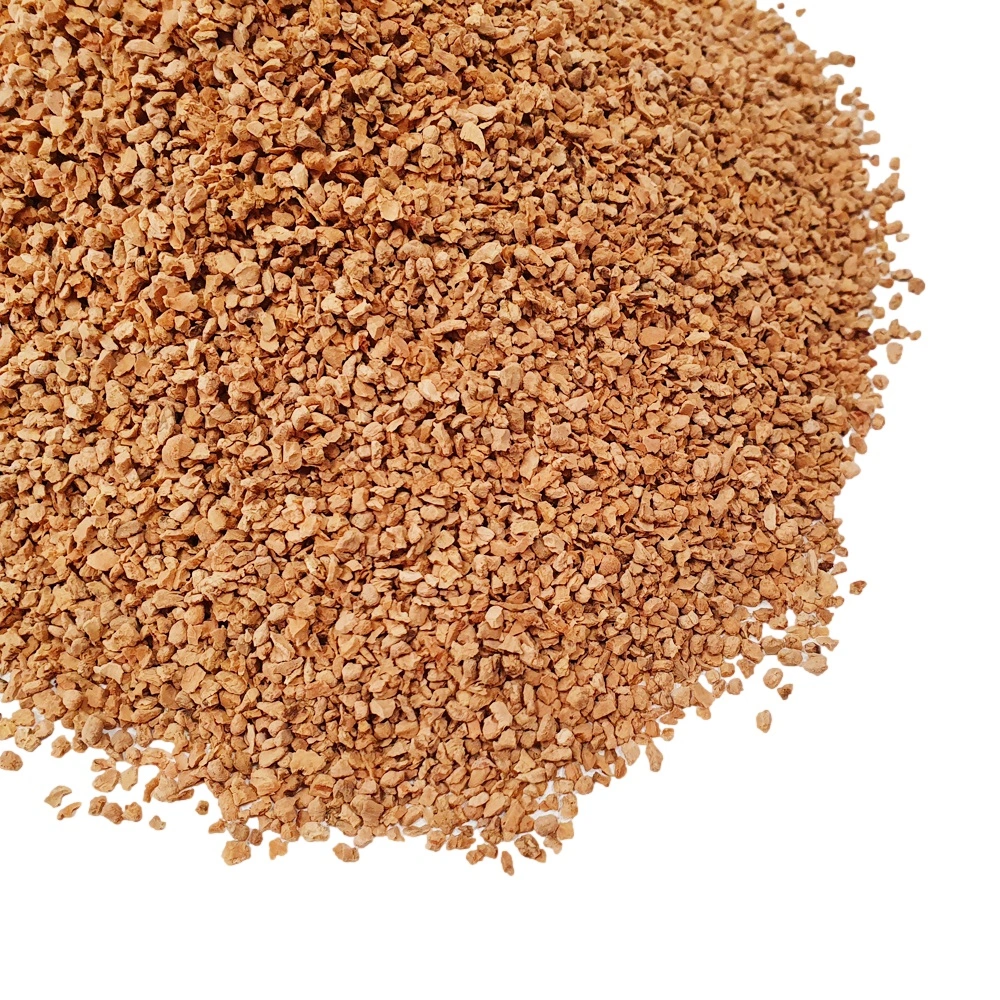
Not entirely. Granulated cork is a natural product, so they're subject to natural variation in particle size and density. It also breaks down more quickly than plastic in certain conditions — which is exactly the point when it comes to microplastics, but it does mean fields may need top-ups more frequently.
That said, manufacturers are working on treated cork granules that improve durability and stability, extending the time between refills.
The Bottom Line
Artificial turf isn't going away. It's practical, durable, and well-suited to high-use sports facilities. But the plastic infill that comes with it — the rubber granules, the microplastics, the long-term environmental cost — that's something we can change.
Granulated cork is a simple, proven, and increasingly affordable alternative. It’s made from a renewable resource. It don't shed persistent plastic waste. It performs well on the pitch. And it gives turf owners something that rubber never can: a material that doesn't outlast its welcome.
The next time you see an artificial turf pitch, look closely. The grass is plastic. The backing is plastic. But the infill? It could be cork. And that would be a step in the right direction.
FAQ
What size granulated are used for artificial turf infill?
Typically 10-20 mesh, which provides good drainage while keeping the grass fibres upright.
Are granulated cork biodegradable?
Yes. They break down naturally over time without releasing toxic residues.
Do cork granules absorb water?
They are naturally water-resistant due to the suberin content in cork, which helps maintain pitch drainage.
Is cork infill FIFA-approved?
Some cork infill products have been evaluated under FIFA quality standards for artificial turf. Each product should be assessed individually.
How long does cork infill last?
Durability depends on usage levels and weather conditions, but many cork systems last several seasons before requiring significant top-ups.
References
IndiaMART – Cork Granule Product Specifications
Flints – Cork Granules Product Information
Microplastics and Environmental Impact
Microplastics Sources and Health Concerns
About the Author
Linda Song has been working with cork-based materials for Xi’an Leecork Co., Ltd. for 15 years, supplying Granulated cork to various industries including sports infrastructure and construction. Linda Song focuses on material performance and sustainable alternatives in industrial applications.

You May Like
0Related Industry Knowledge