
From Plain Cork Circles to Custom Designs – I Tried Two Ways to Personalize This Set of Coasters
Last month I was cleaning up and found a bunch of coasters lying around. Some were freebies from shopping. Some I grabbed at the grocery store. A few were left behind by a friend who moved out. All different colors and styles, but none of them actually looked good on my table.
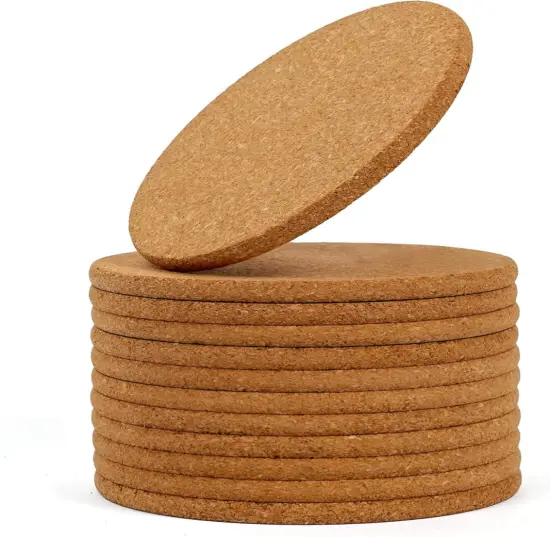
Then a supplier sent me a sample box. I opened it and saw the most basic Round Cork Coasters you could imagine – 10cm across, a stack of 4mm and a stack of 5mm, no prints, no colors, just plain cork.
My first thought was, "It's just a piece of cork. What's the difference between this and the cheap ones online?"
After using them for a couple weeks, I went back and checked my order history. Those old coasters cost anywhere from a couple bucks to maybe fifteen. None of them lasted more than six months. Either they warped from moisture, got stained beyond cleaning, or just disappeared somewhere. But this pile of Round Cork Coasters still looked the same after over a month. That got me thinking – what actually makes a good coaster?
Looks matter more than you think
I used to think coasters just needed to work. Then I realized that's not enough.
When friends come over for dinner, the table is set, food is plated, and then everyone gets a yellowed, warped coaster in front of them. The whole vibe drops instantly. All that effort plating food, ruined by a cheap coaster.
These Round Cork Coasters are just natural cork color – light brown with some subtle grain variation. No prints, just simple. They don't clash with anything – dark table, light table, doesn't matter. I'd say their biggest strength is that they don't draw attention. You don't notice them. But if you take them away, something feels missing.
I ended up drawing a few simple patterns on some of them with a water-based marker. Let them dry, and they actually looked decent – almost like the custom ones you see in stores. One thing though – detailed designs tend to bleed a bit on cork. Simple lines work best.
You don't think about absorption until something spills
Does a coaster really need to absorb water? I used to think it didn't matter.
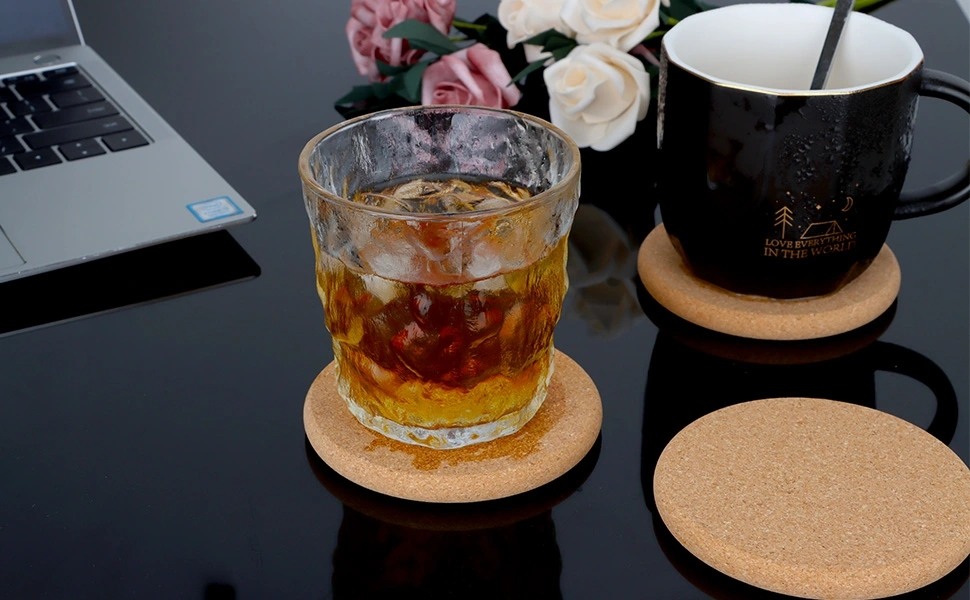
Then one day I carried an iced coffee to the living room. Condensation was dripping all the way. Set it down on my old coaster, and the surface got wet fast. Water ran right off the edge onto the table. I was busy and didn't clean it up right away. Later, there was a faint white ring on the wood.
With the Round Cork Coasters, same situation – condensation got absorbed right into the cork. The wet surface dried up fast, and water never made it to the table. I watched it once – maybe a minute or two, and the surface felt mostly dry. The moisture went into the cork, but the coaster stayed firm. No softening, no warping. That absorbency and breathability is what makes cork actually useful.
4mm vs 5mm – the difference is really just how they feel
The sample box had both 4mm and 5mm thicknesses. I assumed 5mm would last longer, but that's not the difference at all. It's about how they feel in your hand.
The 4mm ones are lighter and stack thinner. Under a wine glass or tall slender glass, they look more balanced – not too chunky.
The 5mm ones feel more substantial. When you pick up your drink, you can feel the coaster under your fingers. It doesn't slip. With heavier beer mugs or large coffee mugs, the 5mm ones feel more secure.
If I had to pick, I'd go 5mm for big glasses and iced drinks. More grip, more confidence. For daily coffee or tea, 4mm is totally fine – it doesn't stand out on the table. I kept some of both and switch based on the glass. Neither is better, just different.
One box, three spots
I got 8 Round Cork Coasters total. Didn't put them all in one place.
Four went on the dining table for meals and tea. Three on the living room coffee table for drinks while watching TV. One in the kitchen for the coffee setup.
Turns out this split works well. The dining table ones get used the most – every meal, then a quick wipe. The coffee table ones handle mostly cold drinks, so condensation is a thing, but that's exactly where cork's absorbency helps. The kitchen one doesn't get used as a coaster much – sometimes I put a lid on it, sometimes it holds a jar of spices.
One detail I like – they're all the same color. The dining table and coffee table aren't far apart, and different colored coasters would look messy. Natural cork color keeps everything consistent.
Two ways I tried customizing them
These Round Cork Coasters came blank. But I had some tools on hand and tried two ways to personalize them.
One was laser engraving. You carve text or simple designs into the cork, and the engraved area darkens. Clean finish, no fuzzy edges, and it's permanent. Downside is you're limited to one color – no full-color prints.
The other was hand-drawing with water-based markers. More color options, let it dry and it's ready. But it's not waterproof. If water sits on the surface, the ink can bleed.
For commercial use, laser engraving or heat transfer printing is the way to go. For personal fun, markers work fine – if you mess up, just flip it over and use the other side. It's cork, both sides work. A lot of people buy these blank and DIY them with simple lines or text to give as small gifts.
Wrapping up
A coaster isn't a big deal. But you use them every day. How they feel and how they look matters more than you'd think. Cheap ones work, but they don't last. Something a little better doesn't cost much more and lasts way longer. Simple math.
These Round Cork Coasters have been in use for almost two months, and they'll keep going for a while. No warping, no mold, no stains that won't come off. They don't look out of place on the table. If you need new coasters, give these a shot. Samples and bulk orders both work. Just email.
FAQs
Q1: Do these cork coasters absorb condensation from cold drinks?
Yeah, pretty quickly. The moisture from the glass gets absorbed fast so it doesn't pool up on the surface or run onto the table. If you leave the glass sitting in one spot for hours though, the coaster will get damp. Take it off, let it air out, and it dries back to normal.
Q2: Does the surface get rough over time?
Not with normal use. Cork is sanded smooth. If you scrape it with hard stuff or scrub too hard, it will show wear over time. But for daily use, just wipe with a damp cloth – no need to scrub.
Q3: Which thickness should I get – 4mm or 5mm?
Depends what you like. 4mm is lighter and takes up less space – good for tea or coffee. 5mm feels sturdier, better for large iced drinks or heavy mugs. They're both fine. I kept some of each and switch depending on the glass.
Author Bio: Rue, Sales Representative at Leecork, Housewares & Furnishings Group. For product inquiries, feel free to email info@leecork.com.


Related Industry Knowledge