
Cork Rubber Yoga Mat: The Base Matters More Than You Think
If you practice hot yoga in a room that hits 105°F, you already know the mat can make or break your class. I’ve used a Cork Rubber Yoga Mat for almost two years, mostly in hot Vinyasa and a few Bikram-style classes. Here’s the honest version most product pages skip: cork gets the attention, but the rubber base decides whether the mat actually works.
Cork Is Only Half the Story
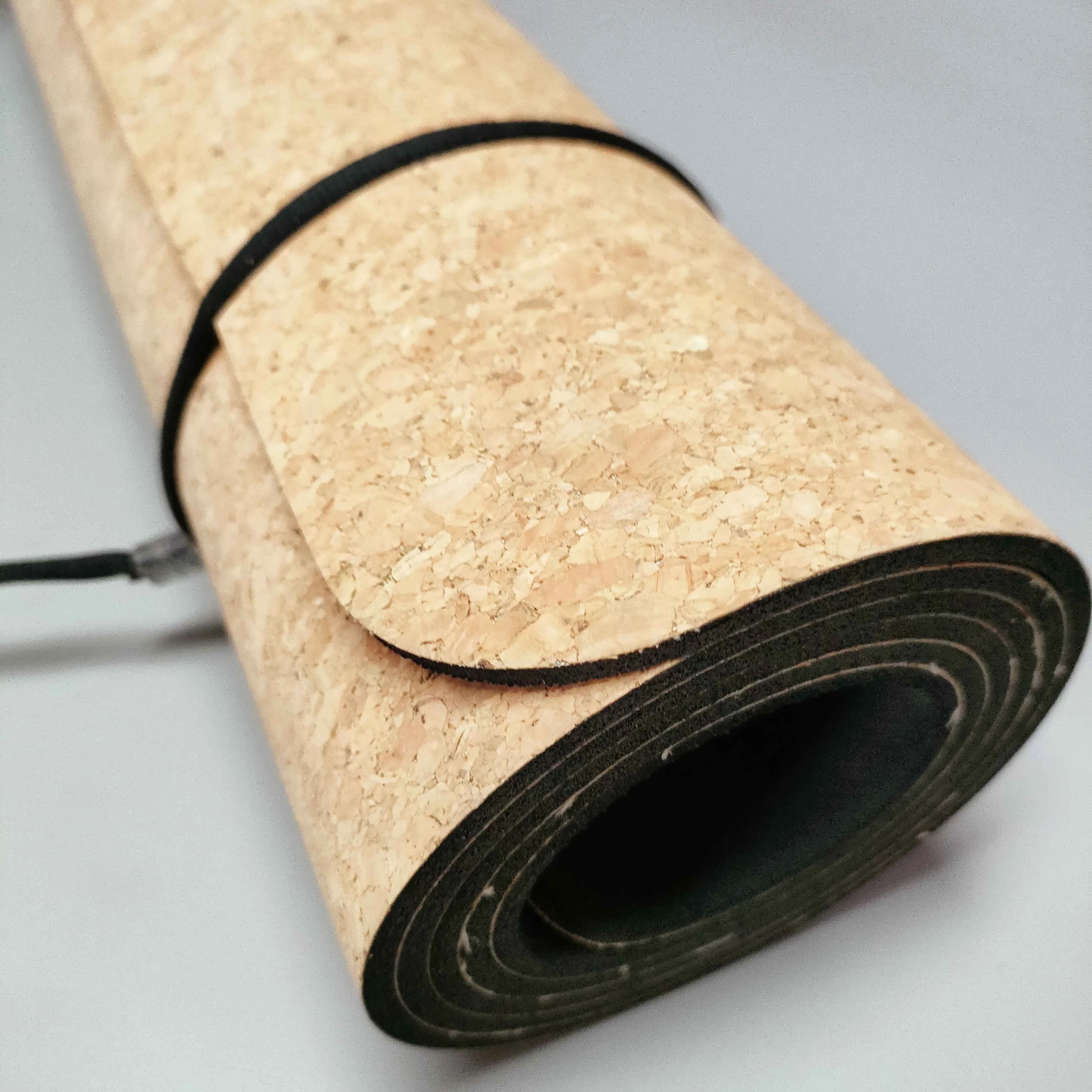
A Cork Rubber Yoga Mat is exactly what it sounds like: cork on top, rubber on the bottom. Cork handles sweat. Rubber handles the floor. If the rubber is cheap, the mat will slide, curl, or bubble, no matter how good the cork is.
A friend in Berlin found this out during a 90-minute class. She bought a lightweight mat advertised as cork rubber. By the standing series, it was sliding across the wood floor and the corners were curling. She assumed cork was overhyped. Then she checked the base. It was TPE, not natural rubber. She switched to a 4.5 mm mat with natural rubber backing. Same studio, same heat, same sweat. No sliding. The mat stayed flat. That one change fixed everything.

Look at the Base Before You Buy
Natural rubber is heavier and has a smell at first. It also grips tile and wood far better in a heated room. TPE and foam bases are lighter and cheaper, but heat and sweat can make them move. If you practice in a studio with smooth floors, natural rubber is usually the safer bet.
The trade-off is weight. A Cork Rubber Yoga Mat often weighs 2.5–3 kg. In Los Angeles, where many people drive to class, that’s fine. In New York, London, or Paris, where you might walk, bike, or take the Tube, it gets old fast. I know a guy in Brooklyn who loved his mat but left it at the studio because carrying it on the subway with a laptop bag was miserable. If you commute, decide whether the mat lives at home, in a locker, or in your bag. There’s no shame in a studio mat if you’re not hauling it daily.
The First Two Weeks Are Not the Real Test
New cork rubber mats can smell like rubber. Air it out for a few days before class. Don’t judge the grip in your first hot class either. Cork often feels less tacky when completely dry. In a cool restorative class, it may feel slick at the start. Mist your palms and feet before class. Avoid lotion on your hands, because it leaves a film on cork.
In a hot room, sweat takes over within minutes. That’s when the mat starts to feel secure. One student in Florida told me she used to keep a towel under her hands for the entire class. After switching to a Cork Rubber Yoga Mat, she stopped bringing the towel. She still sweats heavily. The difference is she doesn’t have to manage it.

Cleaning, Storage, and the Mistakes I Made
I once rolled my mat while it was still damp after a hot class. Two days later, it smelled like a wet basement. Cork is antimicrobial, but the rubber base and the cork-rubber bond are not invincible. Always air dry flat before rolling.
For normal cleanup, wipe the cork with a dry or slightly damp cloth. Once a week, or after a really sweaty class, spray a 4:1 mix of water and white vinegar, wipe gently, and let it dry flat. For the rubber side, use water only. Harsh cleaners break down rubber. Never soak the mat. Never put it in a washing machine.
Also, don’t leave it in a hot car. In places like Arizona or southern Spain, heat can warp the rubber and weaken the bond. If your apartment is small, store it rolled but not compressed under heavy stuff.
Who Should Skip This Mat
If you mostly do yin, restorative, or gentle yoga in a cool room, a Cork Rubber Yoga Mat may feel too firm and too dry. If you travel a lot, it’s too heavy. If you hate the smell of natural rubber, look at other options. But if you sweat hard in hot yoga and you’re tired of towels bunching under your hands, the cork-rubber combo is worth trying. Just buy from a brand that uses natural rubber and read the reviews about curling.
Author
FAQ
Q1: Is a Cork Rubber Yoga Mat good for hot yoga?
A: Yes, if the base is natural rubber. Cork grips when wet, and natural rubber keeps the mat stable on tile or wood. Cheap TPE bases can slide and curl.
Q2: Why does my Cork Rubber Yoga Mat curl at the edges?
A: Usually because of a weak base or poor bonding. Natural rubber backing lies flatter. If it arrives curled, air it out flat for a few days.
Q3: Does it slip when dry?
A: It can feel less tacky when completely dry. Mist your hands and feet before class, or wait for natural sweat to build.
Q4: How do I clean it without damaging it?
A: Wipe the cork with a damp cloth. Use water and white vinegar once a week. Wipe the rubber with water only. Air dry flat. Never soak it.
Q5: Can I leave it in the car?
A: Better not. Extreme heat can warp the rubber and break down the bond between cork and rubber.

You May Like
0Related Industry Knowledge