
Cork Peanut Massage Ball: Your Portable Fascia Release Assistant
In today's fast-paced world, stiff shoulders and necks, aching lower backs, and tired legs have become almost everyone's "standard package." Professional massages are too expensive, and foam rollers are too bulky to carry around—this is where a small cork peanut massage ball might just be the answer you've been looking for.
What is a Cork Peanut Massage Ball?
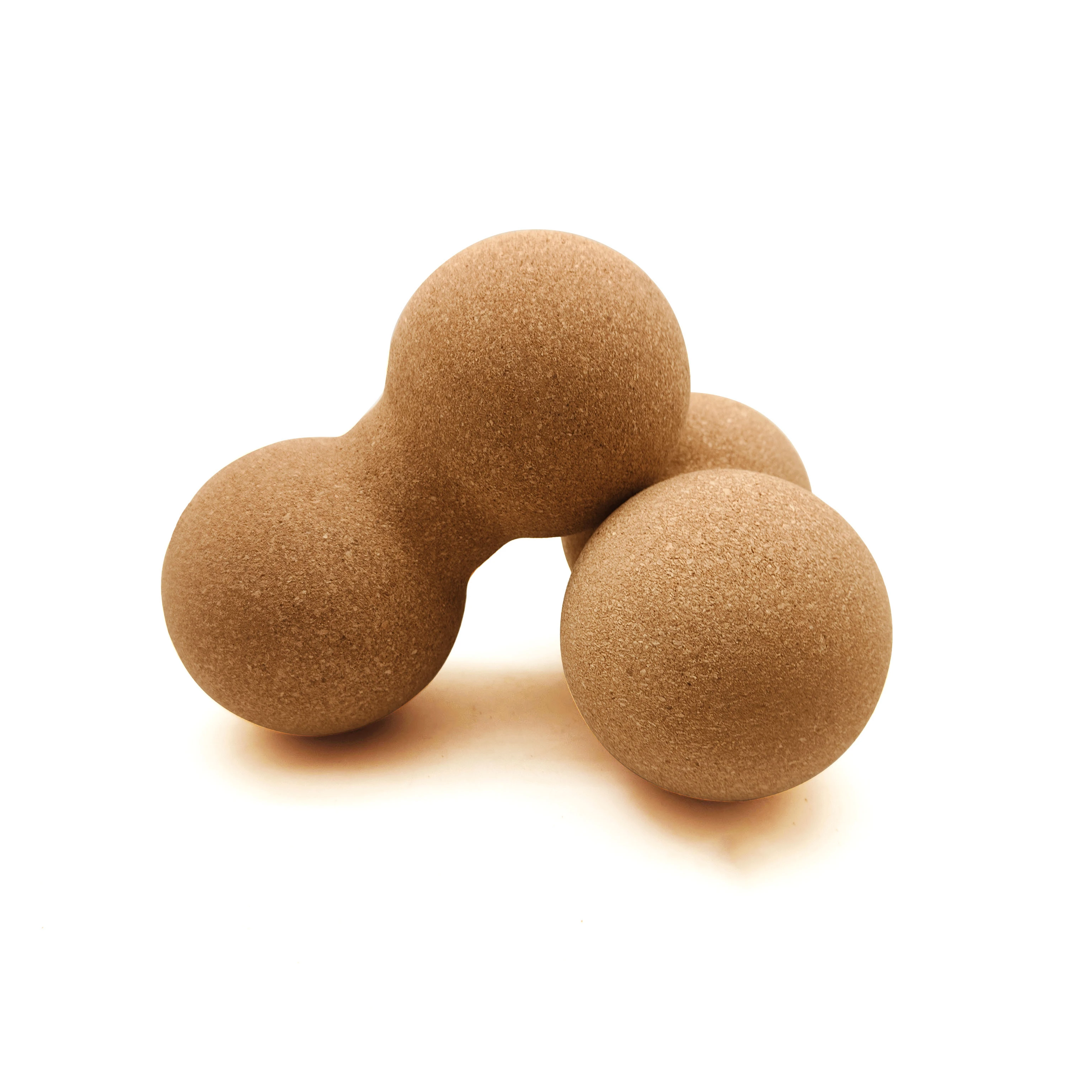
Cork peanut massage ball, made from natural cork. Featuring a dual-sphere design with a central groove, it measures approximately 7–8 cm × 15–16.5 cm and weighs about 117 grams – lightweight and portable.
The groove is the core design element – when massaging your back, it allows the spine to sit safely in the center while the two spheres work on the muscles on either side, delivering precise pressure without compressing bones. Compared to round fascia balls, it offers greater stability and is less prone to rolling or slipping, making it easier to apply accurate pressure to acupoints and fascial knots.
Multiple Benefits of Natural Cork Material
Eco-friendly and sustainable: Cork is harvested from the bark of cork oak trees without cutting down the trees, and it can be harvested every 9 years—a renewable natural resource. Cork products are naturally biodegradable, leaving no extra burden on the planet.
Naturally antibacterial and odor-resistant: Cork contains natural ester compounds that effectively inhibit bacterial and microbial growth, repel dust and dirt, and resist unpleasant odors even when you sweat. This means you don't have to worry about your massage ball developing a stale sweat smell over time.
Skin-friendly and non-slip: The cork surface has a fine granular texture that absorbs moisture and provides grip, so even after a sweaty workout, you can hold it firmly or press it under your body without slipping.
High-density and durable: High-quality cork massage balls are typically compression-molded from high-density cork granules of about 70D. The one-piece molding process makes them sturdy, durable, and resistant to deformation—ready to accompany you for the long haul.
Lightweight and portable: Cork is extremely light, adding virtually no weight to your bag. You can take it with you on business trips, vacations, or to the gym.
Core Advantage: Why is the Peanut Shape So Effective?
The growing popularity of the cork peanut massage ball comes down to two key factors: precision and safety.
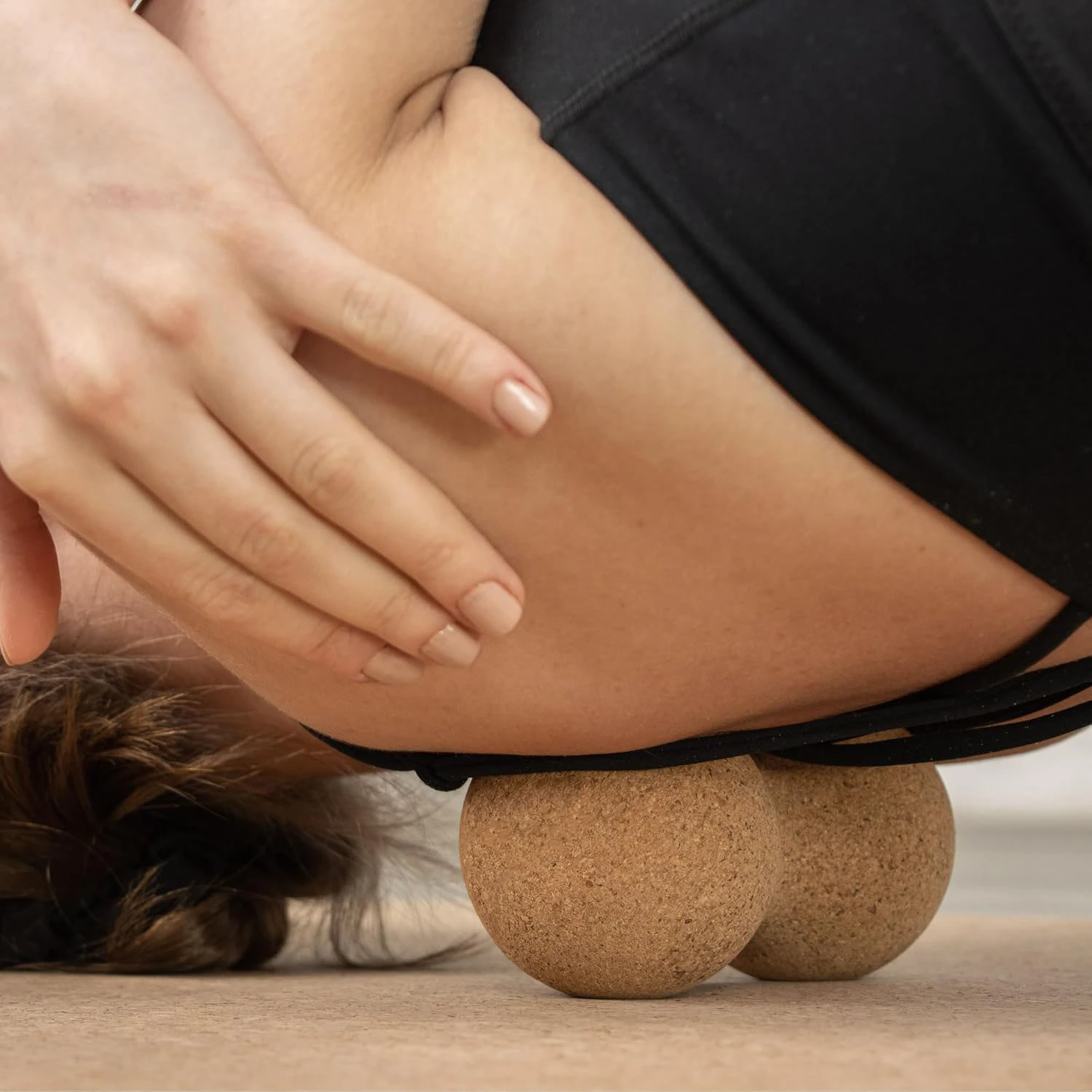
Spinal Safety – Massage Without Pressure on the Spine:The peanut ball's groove leaves space for the spine, so massage targets only the muscles without compressing the vertebrae. In contrast, standard foam rollers have a large contact area and can easily transfer pressure onto the spine.
Precise Trigger Point Targeting:The dual-ball design works on symmetrical muscle groups simultaneously (e.g., on either side of the spine or neck), delivering precise pressure to trigger points (muscle knots).
More Targeted Than Foam Rollers:Foam rollers are good for broad-area relaxation, but they can feel clumsy for areas like the neck, shoulders, the sides of the spine, and the soles of the feet. The peanut ball is compact and agile, allowing you to pinpoint each tense spot with precision.
Stable and Easy to Control:Single massage balls tend to slip and slide. The peanut ball's dual-sphere design sits more securely, giving you better control over the rolling direction and making it easier to apply pressure exactly where you need it.
Full-Body Massage Guide
Foot Relaxation: Place the peanut ball under your foot and roll it back and forth to massage the arch and activate its strength. Daily rolling can help improve leg alignment, and using it before practice quickly relieves foot fatigue.
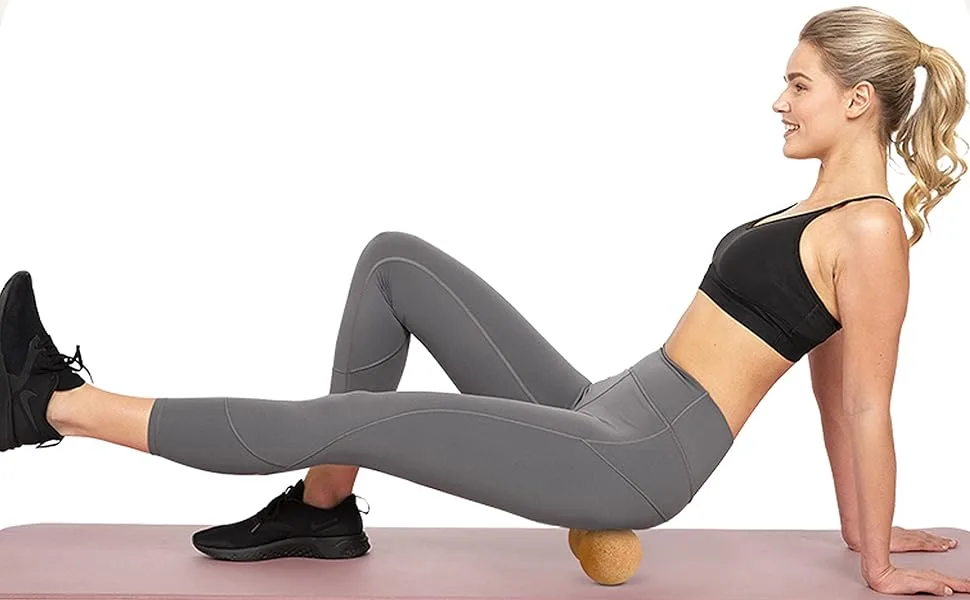
Calves & Thighs: Place the peanut ball under your calf or thigh, and use your body weight to roll it back and forth with pressure. Do this for 2–3 minutes on each side to relieve post-workout soreness. For the outer thighs and glutes, the 8cm large-sized ball is recommended, as its larger contact area provides better relaxation.
Shoulder & Neck Relief: Place the peanut ball behind your neck with the groove aligned to your cervical spine. Lean against a wall or lie flat, and slowly roll it up and down. The two bulbous ends press into the muscles on either side of the spine, effectively relaxing the neck. The cork material won't pull your hair, making for a smoother experience.
Back & Lower Back: Lie flat, place the peanut ball under your lower back, find tender points, and pause to apply pressure while coordinating with deep breathing to relax the muscles. You can also use it against a wall, rolling the ball between the wall and your back. Rehabilitation therapists also recommend that patients with lumbar disc herniation use the peanut ball to assist in bridge pose training to enhance core stability.
Arms & Wrists: Hold the peanut ball with one hand and roll it over your upper arm and forearm. It's also excellent for wrist relaxation after long hours at a desk.
Purchasing Tips
Check the material: Choose products made from 100% natural cork and avoid blends with other materials.
Check the manufacturing process: One-piece molded construction is more durable and less prone to cracking or deformation.
Check the size: The 8 cm diameter large peanut ball is great for broad-area release on the back, glutes, and thighs; the smaller 6 cm size is better suited for the feet, arms, and other small areas.
Final Thought
Cork Peanut Massage Ball – Your Personal Massage Therapist, Anywhere, Anytime. Made from natural cork with a unique peanut shape, this massage ball lets you enjoy precise fascial release wherever you are – at home, in the office, or at the gym.
Whether for post-workout recovery, neck and shoulder relief, or everyday relaxation, this little ball does it all. As one user put it – "Totally worth it."
If you're looking for a portable, effective, safe, and eco-friendly massage tool, give it a try. Being good to yourself is never a luxury.
Author
info@leecork.com
FAQ
Q1: What is the biggest advantage of the cork peanut massage ball?
A: It can precisely massage areas like both sides of the spine and the neck/shoulders that foam rollers can't reach. The waist-curved design avoids bones and targets only muscles. Cork is naturally non-slip, skin-friendly, and breathable — it won't slip even when sweating.
Q2: Which size is best for me?
A: The 8cm size is good for large areas like the lower back, buttocks, and thighs. The 6.3cm size is better for small areas like the neck, shoulders, and feet. Beginners are advised to start with 8cm as it's easier to handle.
Q3: How do I clean and maintain it?
A: Wipe with a damp cloth and air-dry in a cool, ventilated place. Do not use alcohol, brushes, or scouring pads, and avoid direct sunlight.
Q4: What's the difference between cork and silicone/plastic?
A: Cork is natural, eco-friendly, and odorless. Its slightly textured surface provides more grip when sweating. Plastic or silicone balls tend to slip when sweaty, and some may have an unpleasant smell.
Q5: Who is it suitable for?
A: Office workers who sit for long hours, active individuals, yoga enthusiasts, and those with tired feet. Pregnant women, seniors, and children can also use it.

You May Like
0Related Industry Knowledge