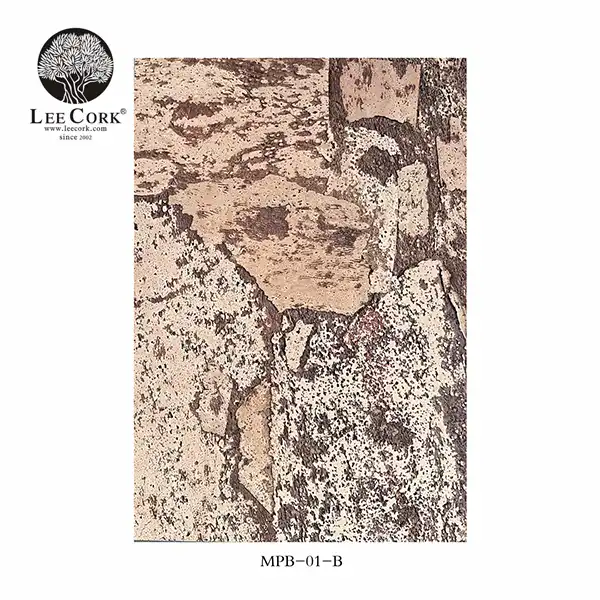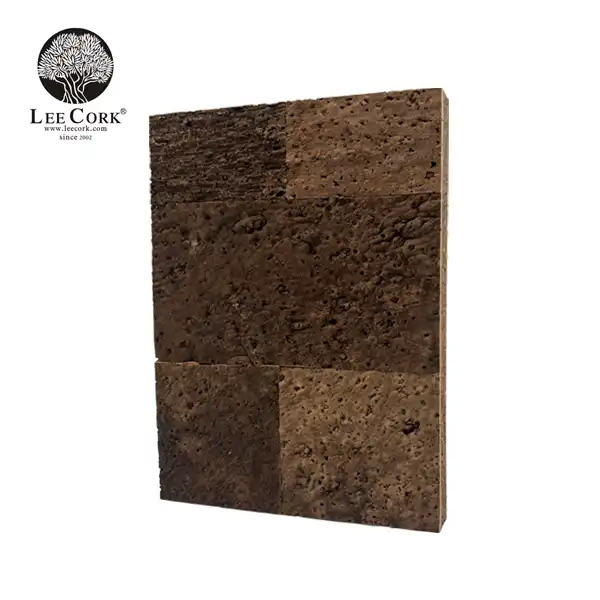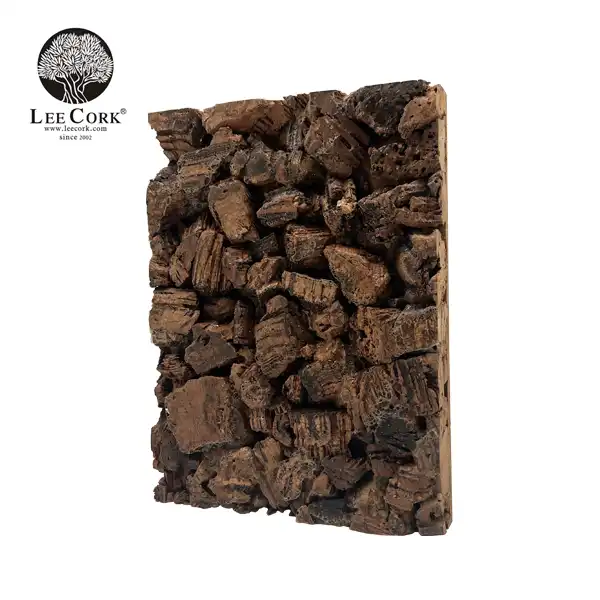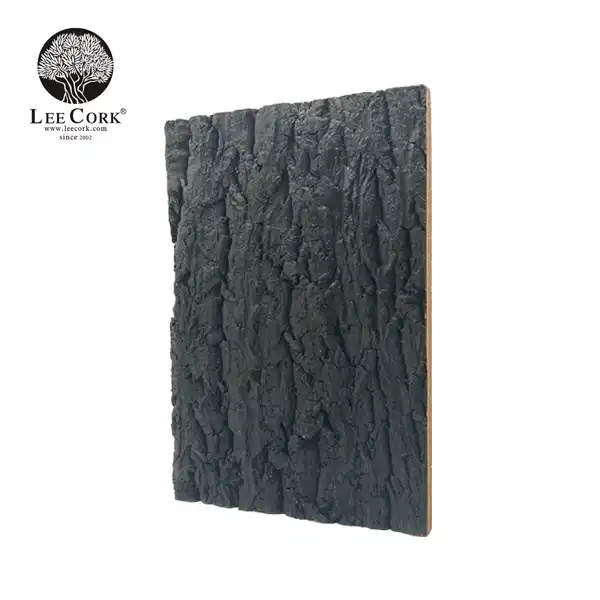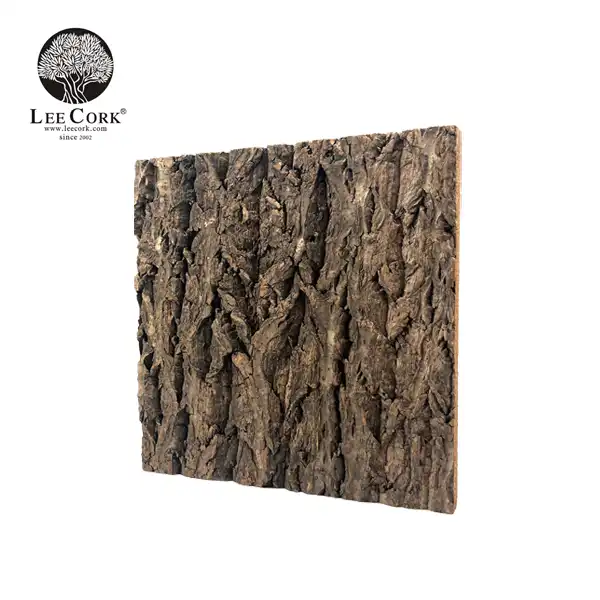
Why is Your Terrarium Missing That Wild Touch? Unveiling the Magic of reptile cork background
After keeping reptiles for over five years, I have seen too many hobbyists obsess over expensive LED lighting, organic topsoil mixes, and live insect feeders—only to leave the largest visual area completely empty. Let's be honest: a bare glass tank, no matter how rare the gecko inside, looks like a temporary holding cell.
Everything changed the day I installed my first piece of natural cork bark. I quickly realized that a reptile cork background is not just a decorative poster. It is the soul of a rainforest vivarium and a functional gym for your arboreal pets. Today, we are not talking about those unrealistic, injection-molded foam fake rocks. Let's dive into why this Mediterranean bark transforms your glass box into a living piece of art.
Why Cork is the "Chosen One" for Reptile Enclosures?
Many beginners ask: there are so many background materials on the market—resin, coconut fiber, spray foam—why cork?
Mold Resistance: A Blessing for Lazy Keepers
Anyone who has kept a high-humidity vivarium knows: moisture is the number one enemy of backgrounds. Standard PU foam backgrounds, after weeks of daily misting, grow black mold in every tiny crevice. Not only is it ugly, but it can also cause respiratory infections in your reptiles.
Cork bark, however, has a natural superpower. It contains a substance called suberin, which makes it water-resistant and rot-proof. Even if you mist heavily every day, as long as you have basic ventilation, a reptile cork background rarely develops mold. For dart frog or day gecko keepers, this feature alone is worth the switch.
A Natural "Acupressure Mat": Perfect for Tiny Claws
If you keep crested geckos, gargoyle geckos, or any tree-dwelling species with adhesive toe pads, you understand how important friction is. Glass is too slippery. Resin is too hard. The rough, slightly spongy surface of natural cork bark perfectly mimics the tree trunks they evolved to climb.
Watching your little lizard sprint upside-down across a reptile cork background, or even sleeping vertically attached to its surface, brings a level of enrichment that cheap printed backgrounds simply cannot provide.
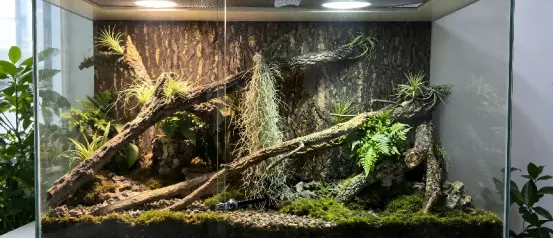
Hands-On Guide: From Total Beginner to Biotope Master
I know talk is cheap. Let me share some real-world hacks.
Don't Buy "Reptile Kits" – Search for "Cork Bark Scraps"
This is the most honest advice I can give. Many "reptile-specific" compressed cork boards on the market are expensive and look unnaturally uniform.
My method:
Search for natural cork bark scraps instead. A true reptile cork background is all about "rawness." Look for pieces 1-2 inches thick, with original bark furrows and maybe even a few patches of natural moss.
Assembly trick:
Do not tile them flat. Use spray foam to attach different-sized bark pieces in a "large to small" stacking pattern across the back wall. Create depth and overhangs. Use large pieces as the main structure, and smaller pieces underneath to form caves. This not only looks better but also—
Maximizing Vertical Space
If your tank is only 24 inches tall, a flat reptile cork background only allows your pet to sit on the wall. But by stacking and overlapping, you can create "second floor" and "third floor" ledges.
The pro move:
Stuff Neoregalia bromeliads or mini orchids into the crevices between bark pieces. Their roots will naturally grow down the bark. This not only helps filter water (if you have a false bottom) but also makes the whole ecosystem more stable. In my experience, a lizard living in this setup stops glass-surfing and instinctively climbs to the highest point to display its territory.
Beyond the Terrarium: The Crossover Aesthetics
Do not think this material is only for pets. I recently used a large reptile cork background on the accent wall behind my living room TV.
Compared to mass-produced wallpaper, the raw, primitive energy of natural cork is shocking. It absorbs sound and passively regulates indoor humidity. Several coffee shop owners have even bought sheets from me to create a "wild aesthetic" in their stores.
What does this mean for you as a reptile keeper? Even if you eventually sell your geckos, this background remains a high-end living wall. It will not become another piece of electronic waste like fake plastic rocks. It is biodegradable and sustainable.
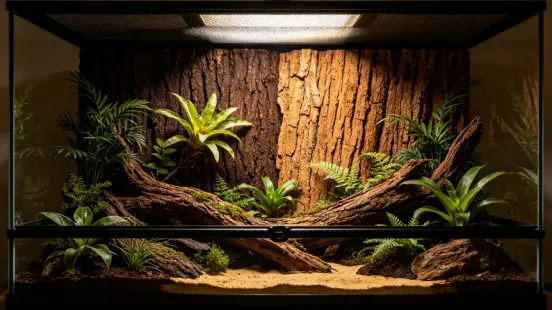
Maintenance & Care: Even for Lazy Keepers
No product is perfect. Although cork resists mold, if your vivarium is a stagnant swamp, any material will eventually smell bad.
You should do this:
1. Pre-treatment: For freshly harvested bark (especially wild-collected), pour boiling water over it or bake it at low heat (200°F/90°C) for an hour to kill any insect eggs.
2. Daily upkeep: If you see a tiny mold spot (usually due to poor airflow), don't panic. Spray it with diluted EM solution or toss in a few springtails. Biological control works within hours.
In summary, a reptile cork background is currently the highest-rated material in my book for combining climbing function, planting texture, visual appeal, and durability.
Ready to Upgrade Your Pet to a "Penthouse"?
Whether you want to mimic the dark corners of the Amazon or the dry branches of Madagascar, the right background is half the battle.
Take Action Now:
Go grab some cork bark, pick up a can of foam, and spend an afternoon remodeling your tank. You will find that not only does the environment improve, but your pet’s behavior changes too—because it finally feels like home.
Author Info
Author: Kevin “K” Thompson
Bio: Herpetoculture enthusiast for 10+ years. Has done field research in Southeast Asian rainforests. Passionate about breaking down advanced biotope setups into beginner-friendly guides.
FAQ – Frequently Asked Questions
Q1: Can I use this cork background for snakes like ball pythons?
A: I don't recommend it. Snakes are strong and love to squeeze into crevices. If the background is only glued with foam, a large snake can easily tear it down, risking injury. Also, snake urine soaks deep into cork and is very hard to clean. For snakes, stick to seamless resin backgrounds.
Q2: Will it rot in a high-humidity paludarium?
A: Quality reptile cork background will not rot. However, if the bottom edge sits in standing water for months, that submerged portion will slowly degrade. Always leave a 0.5-1 inch gap between the bottom of the cork and the waterline, or seal the bottom edge with aquarium silicone.
Q3: Smooth side or rough side – which one should I buy?
A: Always choose the rough side! The smooth side (often the inner bark) looks reddish but is too slippery for tree frogs and geckos with toe pads. The rough side offers maximum grip and more crevices for planting.
Q4: Is it heavy? What adhesive should I use?
A: Cork is extremely lightweight, which is a huge advantage. Use 100% silicone (aquarium safe). Apply silicone to clean, dry glass, press the cork onto it, and hold it in place with masking tape for 24 hours. Never use hot glue—it fails under heat and humidity.
Q5: What if I quit the hobby? Can I repurpose the background?
A: Absolutely. This is the beauty of natural cork. You can remove it, hang it on a balcony as an orchid mount, cut it into trivets for hot pots, or even crush it into small pieces to mix into potting soil for aeration. Zero waste, all natural.
References
1. Swell Reptiles. *Swell Natural Cork Tile Background*. [External Link]
2. Pangea Reptile. *Pangea Cork Background - Rough*. [External Link]
3. Dendroboard. *Cork Bark vs. Foam Backgrounds*. [Forum Archive]
4. NEHERP. *Backgrounds for Vivariums*. [Educational Article]
For more information, please contact us at info@leecork.com

You May Like
0