
I've Bottled a Lot of Wine, and I Had No Idea Wine Cork Grades Went This Deep
Last month I was helping a friend bottle some wine. He made a point of telling me, "Don't mess up the cork order." At the time I thought he was overthinking it – it's just a stopper, how much difference can it really make?
Then he sent me a chart with a bunch of grades listed: Flor, E, S, A, B, C, plus Colmated A and Colmated B. I stared at it for a while and only had one question – what does all of this actually mean?
After digging into it, I realized wine cork is way more complicated than I thought.
First things first – where do natural cork stoppers come from?
Cork comes from the bark of cork oak trees. They don't cut the trees down – they peel the bark. Once the tree is old enough, workers peel it by hand about every nine years, and the bark grows back. So cork is renewable, which I think is a nice bonus.
But here's the thing – the bark from the same tree can produce different quality wine cork. It all depends on density, pore size, and whether there are cracks. Those are natural variations, nothing you can control. So manufacturers use grades to separate them.
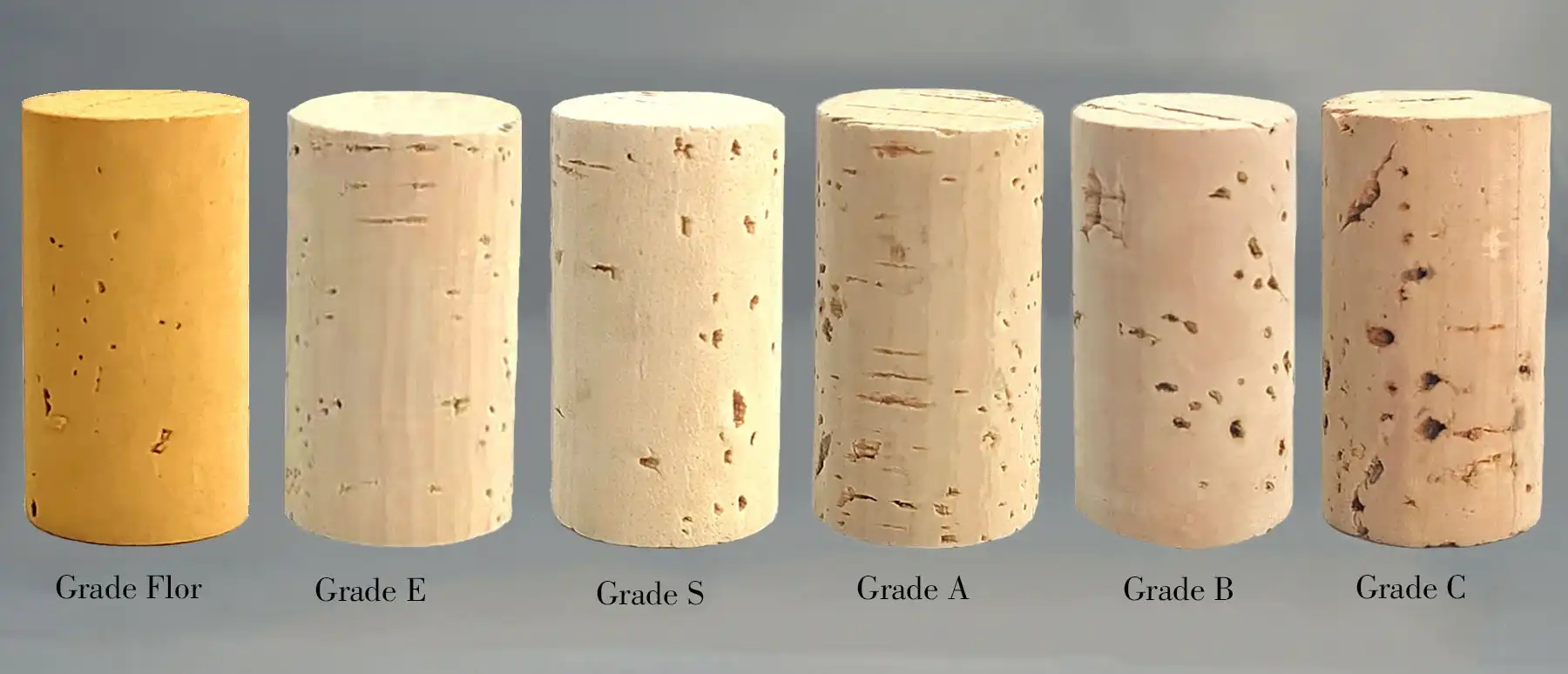
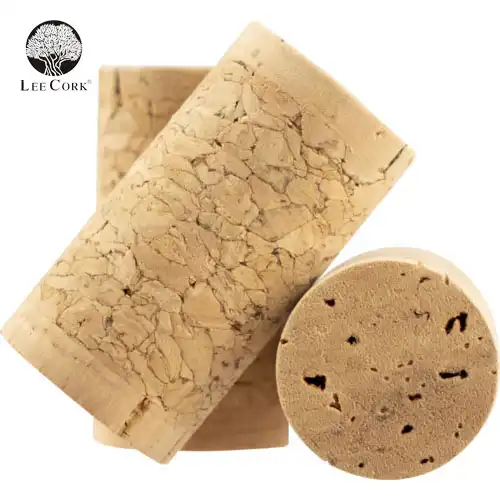
From what I've read, the grade mainly depends on how many pores there are on the surface, how big they are, and if there are cracks or hard spots. Fewer pores, cleaner surface – higher grade. More pores, rougher surface – lower grade.
So what do Flor, E, S, A, B, and C actually mean?
I couldn't make sense of all these grades at first. After reading up on it and asking some people, it started to click.
Flor and E are top-tier. Pricey, meant for good wines that need aging. Fewer pores, higher density, better elasticity. They seal well and hold up for years. Some winemakers I've talked to say Flor-grade wine cork can keep a bottle sealed for ten years or more.
S and A sit in the middle. Reasonable price, good for everyday drinking wine. A bit more pores than Flor, but still decent quality. A lot of small-batch winemakers go for this range – good value without breaking the bank.
B and C are entry-level. You can see the pores on the surface with your eyes. Using them directly for bottling could risk leakage. These grades of wine cork usually don't get sold as-is – they get processed further.
What about Colmated A and Colmated B?
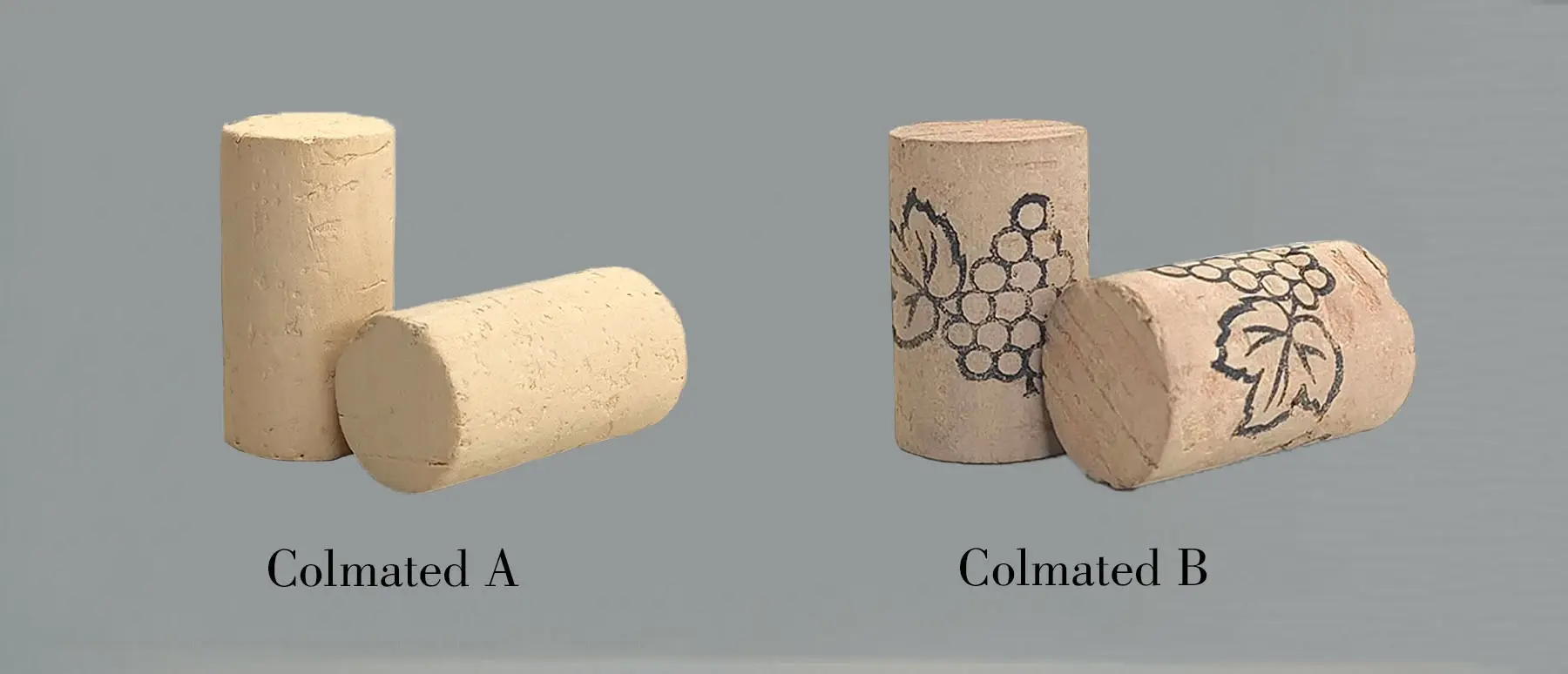
Colmated corks are "filled" corks. The lower-grade ones – B and C – have too many pores and don't seal well. So the manufacturers take cork dust, mix it with food-grade glue, and fill in the pores.
After filling, the surface looks smoother. But if you look closely, you can still see traces of the filler. Colmated A is done more carefully – smoother, cleaner. Colmated B is a bit rougher and cheaper.
These treated wine cork work fine for short-to-medium storage – a couple years is no problem. But if you're aging something for ten-plus years, stick with Flor or E.
Size matters too
The sizes available are 45mm and 44mm length, both 24mm diameter. 45mm is more standard – fits most regular bottles. 44mm is slightly shorter, some bottles work better with that size.
From what I've read, cork size affects how well it seals. Too short and it won't seal tight. Too long and it won't go in. 45mm is pretty much the industry standard. Custom sizes are available too if you need something specific.
Wrapping up
Before all this, my understanding of wine cork stopped at "it's a cork stopper." Now I know there's a lot more to it than what you see on the surface.
Different grades, different sizes, different surface treatments. If you're just drinking casually, S grade or Colmated is fine. If you're bottling your own wine or selling it, I'd lean toward Flor or E – just to be safe.
All grades are available – bulk or single boxes. Just ask.
FAQs
Q1: Will Colmated corks affect the wine's taste?
A1:Nope. The filler glue is food-grade, so it doesn't seep into the wine. But Colmated corks don't seal as well as high-grade natural ones. For long-term aging (five years plus), go with Flor or E.
Q2: How do you tell if a cork is good quality?
A2:Look at the surface pores. Fewer and smaller pores = better quality. Cracks or hard spots mean lower grade. You can also feel it – higher-grade ones are more elastic and spring back faster when squeezed.
Author Bio:Rue, Sales Representative at Leecork, Housewares & Furnishings Group. For product inquiries, feel free to email info@leecork.com.

Related Industry Knowledge