
From Tree to Granulate: How Cork Granulate Are Made
You've seen cork on wine bottles and mood boards. But the cork granulate hidden inside your shoe soles or a football pitch? Most people don't even know they exist — let alone how they're made.
This guide walks you through the entire journey: from a tree in the Mediterranean forest and Qinlin mountain to the tiny granules that end up in sports fields, shoes, and buildings around the world.
Where Cork Comes From – The Tree
Cork granulate start with a tree: the cork oak, or Quercus suber.
Cork is the outer bark of this tree — not the inner wood. And here's what makes it unique: the bark regenerates. You don't cut the tree down to harvest cork. You peel the bark off, and it grows back.
Key facts about the cork oak:
|
Factor |
Detail |
|
First harvest |
After 25 years |
|
Harvest cycle |
Every 9 years, for over 150 years |
|
Global production |
50% from Portugal, 25% from Spain, 17% from China) |
|
Chemical composition |
45% suberin, 27% lignin, 12% cellulose |
The suberin content is what makes cork waterproof, elastic, and resilient. Without it, you wouldn't have the bounce in your shoe sole or the cushion under a football pitch.
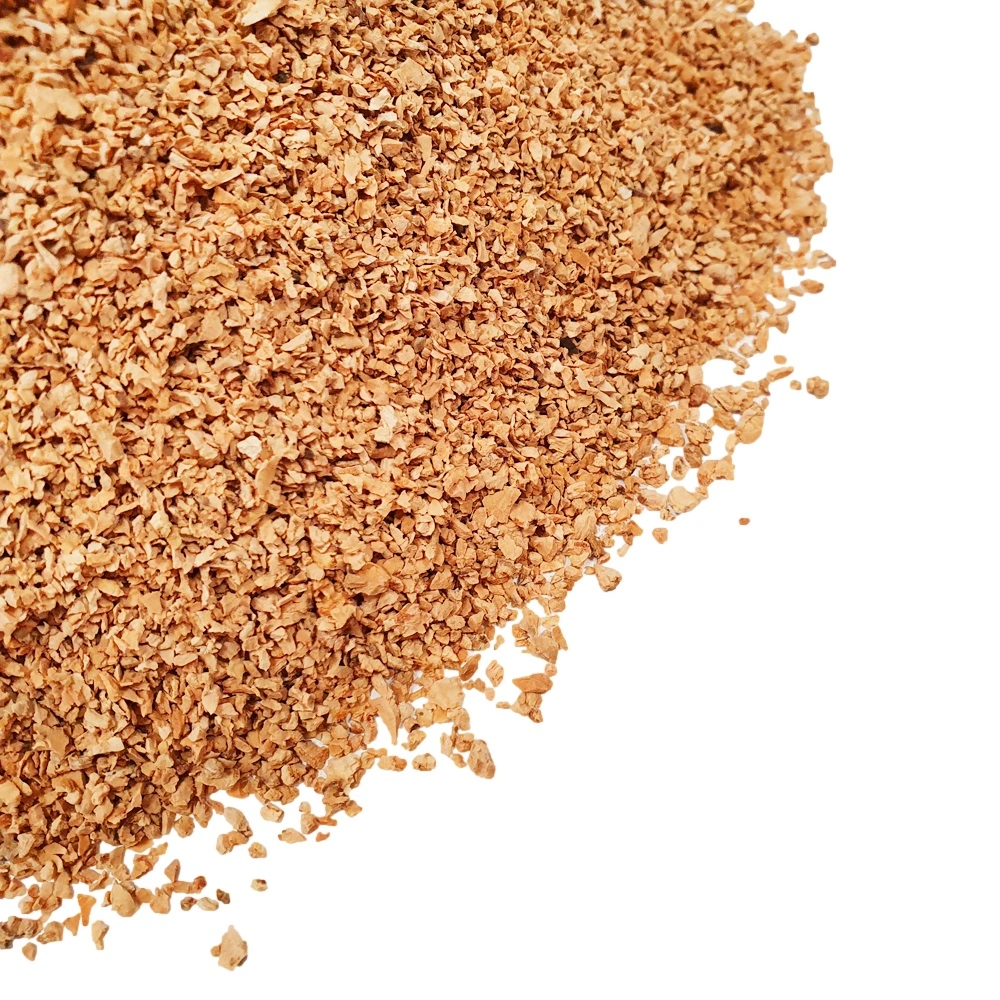
From Bark to Granules – The Production Process
Once the cork bark is harvested, the transformation into cork granulate begins. Here's the step-by-step:
Harvesting and Drying
Harvesting is done entirely by hand using a special axe, typically between May and August when the tree is in full growth and the bark separates easily. The bark is peeled in large planks, then stacked in piles and left to dry for about six months. This stabilisation step is essential before any further processing.
Boiling
The dried planks are immersed in clean boiling water for at least one hour.
Why boil cork?
Removes water soluble substances
Cleans the material
Increases thickness by about 20%
Improves flexibility and elasticity
After boiling, the planks are stabilised again for about three weeks to reach the right moisture content.
Granulation
Now the cork is ready to be ground.
The cork material — which may come from:
Virgin cork (first harvest, not suitable for wine stoppers)
Cork waste from stopper production
Rejected stoppers from quality control
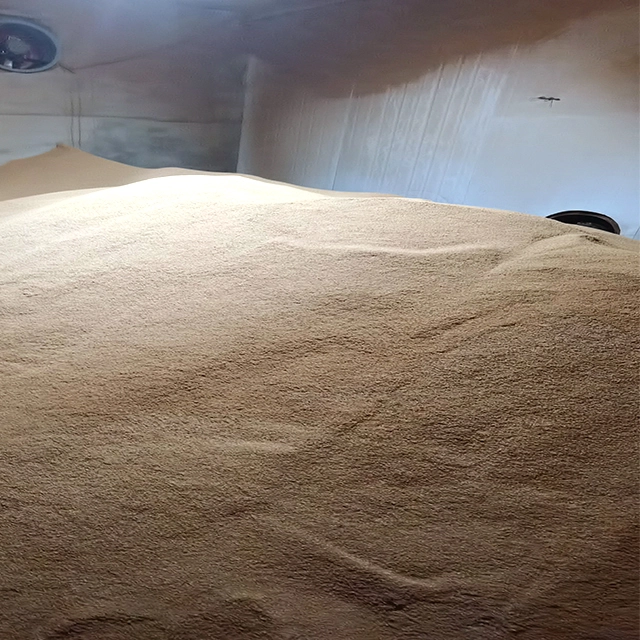
— is fed into mills and ground into granules of controlled sizes. The granules are then:
Screened through different mesh sizes to separate by diameter
Cleaned using pneumatic suction (light granules are lifted by air, removing impurities)
Dried in heated tunnels to achieve a stable moisture content
Common granule sizes:
|
Application |
Typical Size |
|
Wine stoppers (agglomerated) |
3–7 mm |
|
Flooring, insulation |
0.5–5 mm |
|
Fine powder (coatings) |
≤ 0.25 mm (100 mesh) |
Agglomeration (if making blocks or sheets)
For many applications — such as cork blocks, flooring, or rubber-cork composites — the granules are mixed with a binder (e.g., polyurethane glue or natural latex) and pressed into molds or extruded into rods.
Birkenstock's footbeds, for example, mix cork granules with natural latex milk and bake them into shape.
Types and Sizes – Not All Granules Are the Same
Particle size determines application. As a general rule:
|
Size |
Category |
Uses |
|
≤ 0.25 mm (100 mesh+) |
Cork powder |
Coatings, mold release agents, friction materials |
|
0.5–2 mm |
Fine granules |
Shoe insoles, gaskets, some sealants |
|
2–5 mm |
Medium granules |
Cork boards, flooring, agglomerated stoppers |
|
3–7 mm |
Coarse granules |
Agglomerated wine stoppers, sports field infill |
In China, GB/T 42306-2023 provides the national standard for classification, properties, and packaging of cork granules and cork powder. This ensures consistency for industrial applications.
Quality Control – What Happens After Production
Once the cork granulate are produced, they go through a series of quality checks:
Granulometry – screening to ensure particle size meets specification
Purity check – pneumatic separation removes impurities and lighter particles
Moisture content – tested to ensure stability during transport and storage
Density measurement – confirms the specified density range
Foreign material removal – any remaining sand, dust, or debris is removed
Density is a key factor for quality — cork granules generally range from 45–150 kg/m³ depending on the grade. Lower density granules are lighter and more resilient; higher density granules are more compact and suitable for industrial moulding.
From Granules to Products – Where They Go
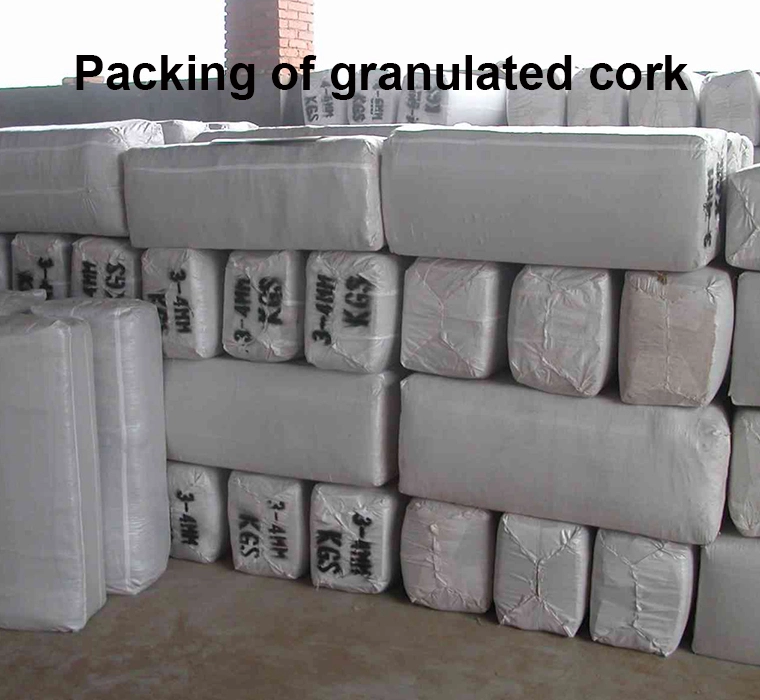
After production, cork granulate are shipped out to manufacturers who turn them into finished goods:
Sports fields: infill for artificial turf
Footwear: shoe soles and insoles
Construction: cork boards, wall panels, insulation blocks
Automotive: gaskets, clutch plates, brake linings
Consumer goods: yoga blocks, coasters, shoe insoles
Packaging: molded cork packaging and stoppers
The journey from tree to granule is complete — but the product itself is just starting its next life.
Conclusion
Cork granules are the overlooked workhorse of the cork industry. They start as bark from a tree that's harvested once a decade for over a century, then boiled, ground, graded, and shipped to factories around the world.
It's a sustainable process — the tree isn't cut down, the bark regenerates, and waste material from stopper production is reused rather than discarded. It's also a precise one: particle size, density, and moisture content all need to be controlled to meet the needs of each application.
The next time you see a cork shoe sole or an artificial turf pitch, you'll know where the granules came from.
FAQ
Are chemicals used in the production of cork granules?
Yes — boiling removes impurities, and some granule grades are mixed with polyurethane glue or natural latex for agglomerated products. However, the cork itself remains a natural material.
Do different particle sizes cost differently?
Yes. Fine grinding and tighter screening add processing cost, so finer powders generally cost more than coarse granules.
Can I get custom particle sizes?
Yes — many suppliers offer custom granulation to specified mesh sizes, subject to minimum order quantities.
Is cork granulate biodegradable?
Yes. Pure cork granules are natural and biodegradable. Products with binders may degrade more slowly.
References
APCOR – Cork Sustainability and Technical Data
GB/T 42306 2023 – Classification, Properties and Packaging of Cork Granules and Cork Powder
Birkenstock Group – Birkopedia: Cork, a Natural Material Full of Wonders
Spinneybeck – About Cork
About the Author
Linda Song has been working with cork based materials for X’an Leecork Co., Ltd. For 15 years, supplying cork granulate to manufacturers and distributors worldwide. Linda Song focuses on material quality, application specific solutions, and sustainable sourcing.

You May Like
0Related Industry Knowledge